
Young Male Budgie Cere Color: Identifying Gender and Health
A young male budgie’s cere color is usually a bright, vibrant blue. This indicates sexual maturity and good health.
A budgie’s cere is the fleshy, often colorful area above its beak where the nostrils are located. In young male budgies, this cere typically turns a bright blue as they mature. This color change is a key indicator of a healthy, mature male budgie and can help bird owners determine the gender of their pet.
Recognizing these subtle changes is crucial for proper care and breeding purposes. Budgies are social and intelligent birds, making them popular pets worldwide. Ensuring you understand their physical characteristics and behaviors will help in maintaining their well-being and happiness.

Credit: www.alittlebudgietoldme.com
Introduction To Budgie Cere Color
Budgies, or parakeets, are small, colorful birds. One intriguing feature is their cere color. This color can tell us a lot about the bird’s age and gender. Young male budgies have a unique cere color, making them easy to identify.
Significance Of Cere Color
The cere is the fleshy area above a budgie’s beak. It comes in different colors. For young male budgies, the cere is usually a bright blue. This bright blue color helps distinguish them from females, who have a brown or white cere.
- Young Male Budgies: Bright blue cere
- Young Female Budgies: Brown or white cere
As they age, the cere color can change. This change can indicate their maturity and health.
Basics Of Budgie Anatomy
Understanding budgie anatomy helps in identifying their cere color. Budgies have a compact body and a short tail. Their beak is curved and strong.
| Part | Description |
|---|---|
| Cere | Fleshy area above the beak |
| Beak | Curved and strong |
| Body | Compact with a short tail |
Budgies also have two feet with sharp claws. These help them grip branches and toys. The feathers are usually green, blue, yellow, or white.
Identifying Male Budgies
Identifying a young male budgie can be tricky. The key feature to observe is the cere. This is the fleshy area above the beak. The cere color provides important clues about the budgie’s gender.
Typical Cere Colors
Typical cere colors differ between young male and female budgies. Young male budgies usually have a purplish or pinkish cere. This color is distinct and helps in identification. Below is a simple table to summarize the cere colors:
| Gender | Typical Cere Color |
|---|---|
| Male | Purple or Pink |
| Female | White or Light Blue |
Changes During Maturity
As budgies mature, their cere color changes. For young male budgies, the cere color transitions from pinkish to a deeper blue. This change usually occurs around six months of age. Below is an ordered list of cere color changes in male budgies:
- 0-6 months: Pinkish or purplish cere
- 6+ months: Blue cere
By observing these changes, you can easily identify a young male budgie. Always keep an eye on the cere color for accurate identification.
Identifying Female Budgies
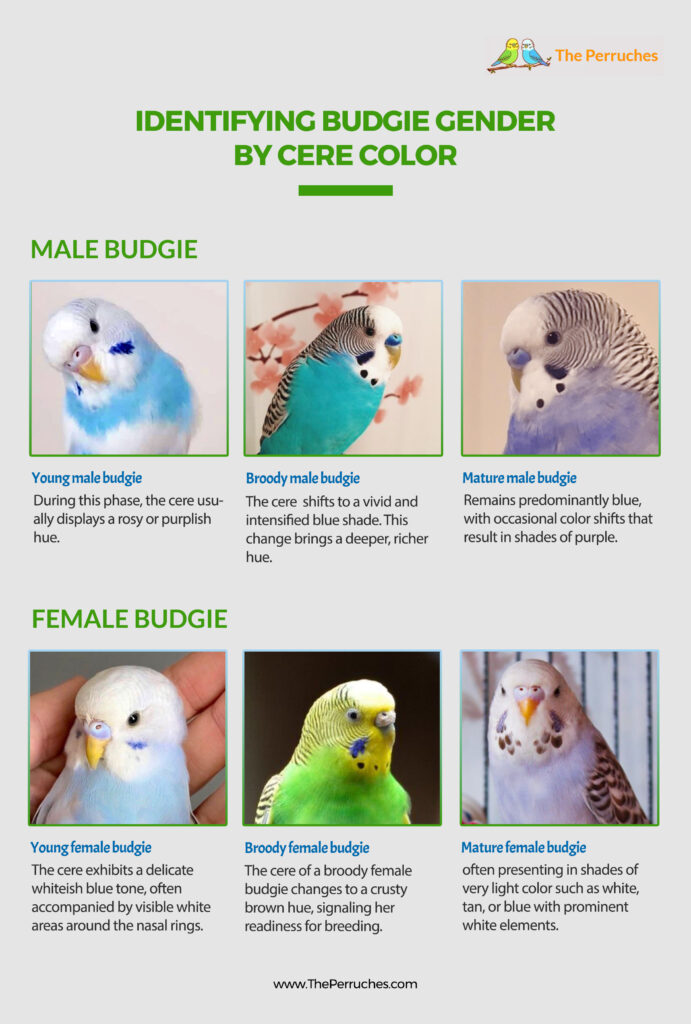
Identifying female budgies can be tricky. Their cere color is the key. The cere is the area above their beak. It changes color with age and gender. Knowing these changes helps identify their gender.
Typical Cere Colors
Female budgies have specific cere colors. Young female budgies often have a pale blue or white cere. As they mature, their cere can change to tan or brown. Male budgies usually have a bright blue cere. This difference helps in identification.
Changes During Maturity
As female budgies mature, their cere color changes. It shifts from pale blue or white to brown. This change usually happens around 6 to 12 months old. Monitoring this change helps identify their gender.
| Age | Cere Color |
|---|---|
| Young (0-6 months) | Pale blue or white |
| Mature (6-12 months) | Tan or brown |
Identifying female budgies requires observation. Note the changes in their cere color. Use this guide to help you. It makes gender identification easier.
Credit: theperruches.com
Health Indicators In Cere Color
The cere, the fleshy area above a budgie’s beak, reveals much about its health. By observing the cere color, you can gauge the overall well-being of your young male budgie. Understanding these color changes helps in identifying potential health issues early.
Signs Of Good Health
A healthy young male budgie typically has a bright blue cere. This vibrant color signifies proper blood circulation and good overall health. Here are some signs of good health in cere color:
- Consistent bright blue: Indicates a well-nourished and healthy budgie.
- Smooth texture: A smooth cere surface shows no signs of illness.
- No discoloration: Uniform blue without any patches or color changes.
Indicators Of Illness
Changes in cere color can signal health issues. A pale or discolored cere might indicate an underlying problem. Below are some key indicators of illness:
| Cere Color Change | Possible Health Issue |
|---|---|
| Pale or white cere | Malnutrition or anemia |
| Brown or crusty cere | Hormonal imbalance or infection |
| Darkened or black cere | Liver disease or severe infection |
Any sudden change in cere color requires attention. Regular observation of your budgie’s cere helps in maintaining its health.
Common Cere Color Variations
Young male budgies exhibit a variety of cere color variations. Understanding these can be fascinating for bird enthusiasts. The cere, located above the beak, provides clues about a budgie’s health and genetics.
Genetic Factors
Genetics play a crucial role in determining cere color. Different genes interact to produce these variations.
- Normal Blue: Common in healthy young males.
- Purple: May indicate certain genetic markers.
- Pink: Often seen in albino and lutino budgies.
Genetic mutations can also affect cere color. These include:
- Recessive Pied: Resulting in a mix of colors.
- Dominant Pied: Producing unique patterns.
Environmental Influences
Environmental factors can also influence cere color. Factors include:
- Diet: Nutrient-rich diets can enhance cere color.
- Sunlight: Exposure to sunlight can alter cere hues.
- Health: Illnesses can lead to changes in cere color.
Providing a balanced diet and proper care helps maintain vibrant cere color.
| Color | Genetic Factors | Environmental Influences |
|---|---|---|
| Blue | Common in healthy males | Good diet and sunlight |
| Purple | Genetic markers | Balanced nutrition |
| Pink | Albino and lutino genes | Proper care |
Understanding these factors helps in caring for young male budgies. Observing cere color can provide insights into your budgie’s well-being.

Credit: www.alittlebudgietoldme.com
Age-related Cere Changes
The cere, the fleshy area above a budgie’s beak, changes color as they age. Understanding these changes helps determine a budgie’s age and gender. Let’s explore the changes in young male budgies’ cere color.
Juvenile Budgies
Juvenile budgies have a unique cere color. It often starts with a pale pink or purple hue. This initial color helps identify them as young birds.
As they grow, the cere color begins to change. This change usually occurs around 3-4 months of age. The color transition is gradual but noticeable. During this phase, the cere may show a mix of pink and blue.
Here is a simple table that outlines the changes:
| Age (Months) | Cere Color |
|---|---|
| 0-3 | Pale Pink or Purple |
| 3-4 | Mix of Pink and Blue |
Adult Budgies
Adult male budgies develop a distinct cere color. By 6 months, their cere becomes a vibrant blue. This bright blue color signifies maturity.
Maintaining this color is a sign of good health. Any deviations might indicate health issues. Regular check-ups ensure your budgie stays healthy.
Here are some key points to note about adult budgie cere color:
- Bright blue cere indicates a healthy adult male.
- Color changes may signal health problems.
- Regular vet visits are crucial for monitoring health.
Understanding cere color changes helps in caring for your budgie. It provides insights into their age and health status.
Behavioral Clues To Gender
Identifying the gender of your young budgie can be tricky. Behavioral clues can help. Observe their actions and habits. These behaviors can indicate if your budgie is male or female.
Male Budgie Behaviors
Male budgies display distinct behaviors. They often sing more than females. Their songs are varied and longer. Males also tend to be more social. They enjoy interacting with humans and other birds.
Male budgies often show off. They may perform dances or head bobbing. This is to attract females. Males also show more curiosity. They explore new toys and environments eagerly.
Here are some common male budgie behaviors:
- Singing varied and long songs
- Performing dances and head bobbing
- Being more social and interactive
- Exploring new things with curiosity
Female Budgie Behaviors
Female budgies are generally quieter. They chirp rather than sing. Their chirps are short and simple. Females are often more reserved. They may take longer to warm up to humans.
Female budgies can be more territorial. They may defend their space from other birds. Females also show nesting behavior. They might chew on paper or wood, preparing a nest.
Here are some common female budgie behaviors:
- Chirping short and simple sounds
- Being more reserved and territorial
- Showing nesting behaviors like chewing
- Taking longer to warm up to new environments
Tips For Budgie Care
Caring for a young male budgie requires knowledge and dedication. These colorful birds need specific care to thrive. Here are some essential tips to ensure your budgie stays healthy and happy.
Diet And Nutrition
A balanced diet is crucial for your budgie’s health. Provide a mix of seeds, pellets, fruits, and vegetables. Avoid giving them avocado, chocolate, and caffeine as these are toxic.
| Food Type | Examples |
|---|---|
| Seeds | Millet, Canary Seeds |
| Pellets | Commercial Budgie Pellets |
| Fruits | Apples, Berries |
| Vegetables | Carrots, Spinach |
Regular Health Checks
Regular health checks are vital for your budgie. Watch for signs of illness like changes in appetite or droppings. Keep an eye on their feathers and beak.
- Examine their eyes and nose for discharge.
- Check their feet and legs for sores or swelling.
- Observe their behavior for any changes.
Visit a vet annually for a comprehensive check-up. This helps catch any potential issues early.
Frequently Asked Questions
What Color Is A Young Male Budgie’s Cere?
A young male budgie’s cere is typically light pink or purplish. As they mature, it turns a bright blue.
How Can I Identify A Male Budgie?
Male budgies have a blue cere once they mature. Young males have a pink or purplish cere.
When Does A Budgie’s Cere Color Change?
A budgie’s cere color changes as they mature. This usually happens around six months of age.
Why Is My Budgie’s Cere Color Changing?
A budgie’s cere color changes due to hormonal shifts as they age. It indicates sexual maturity.
Conclusion
Understanding the cere color of young male budgies helps in identifying their gender. This knowledge is essential for proper care. Observing these changes can enhance your bird-keeping experience. Stay attentive to your budgie’s health and behavior. This will ensure a happy, healthy pet.
Keep learning and enjoy your time with your feathered friend!