5 Best Superzoom Camera for Bird Photography in 2026
Bird photography needs long zoom, steady autofocus, and solid image stabilization. The Nikon P1100 offers the longest reach here, with a 24–3000mm equivalent lens.
The P1000 and P950 are older Nikon options that still give huge zoom ranges for distant birds. Kodak’s AZ528-BK and AZ255 are cheaper choices, with shorter zoom and simpler controls.
This guide compares all five so you can pick the best superzoom for your budget and shooting style.
| Nikon COOLPIX P1100 Super Zoom Camera Bundle (26541) |

| Best Overall | Optical Zoom: 125x | Sensor: 16 MP BSI CMOS | Image Stabilization: Dual Detect Optical VR | VIEW LATEST PRICE | Read Our Analysis |
| Kodak PIXPRO AZ255 Digital Camera 25x Zoom |

| Budget-Friendly Pick | Optical Zoom: 25x | Sensor: 16 MP CMOS | Image Stabilization: Optical Image Stabilization | VIEW LATEST PRICE | Read Our Analysis |
| Nikon COOLPIX P1000 Superzoom Digital Camera (Black) |
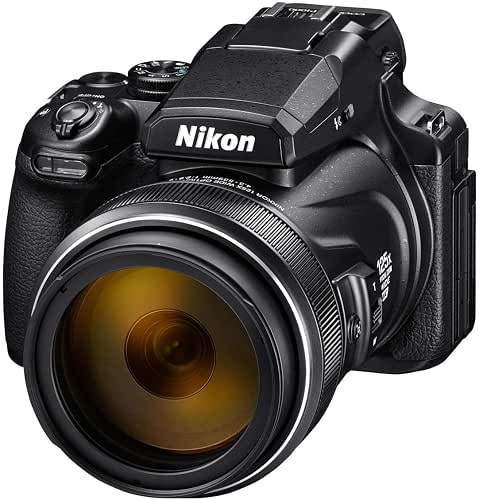
| Best for Power Users | Optical Zoom: 125x | Sensor: 16 MP sensor | Image Stabilization: Lens-shift VR | VIEW LATEST PRICE | Read Our Analysis |
| Kodak PIXPRO Astro Zoom AZ528-BK Digital Camera |
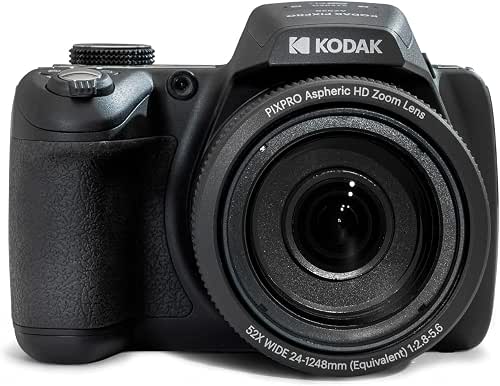
| Best Value | Optical Zoom: 52x | Sensor: 16 MP BSI CMOS | Image Stabilization: Optical Image Stabilization | VIEW LATEST PRICE | Read Our Analysis |
| Nikon COOLPIX P950 Superzoom Digital Camera 83x Zoom |
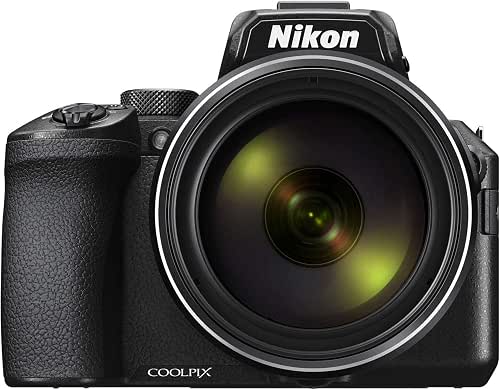
| Best for Birds | Optical Zoom: 83x | Sensor: 16.0 MP | Image Stabilization: Built-in stabilization | VIEW LATEST PRICE | Read Our Analysis |
More Details on Our Top Picks
Nikon COOLPIX P1100 Super Zoom Camera Bundle (26541)
The Nikon COOLPIX P1100 stands out as the top all-around pick provided you want reach. You get a 125x optical zoom, stretching from 24mm to 3000mm, so distant birds fill your frame. Dual Detect VR helps steady those extreme shots, while the 16 MP BSI CMOS sensor and Hybrid AF with 49 points keep details sharp. You can shoot 4K UHD video, pull stills from footage, and use the vari-angle screen or electronic viewfinder. This bundle adds batteries, SD cards, filters, a bag, charger, tripod, and cleaning gear, so you’re ready fast.
- Optical Zoom:125x
- Sensor:16 MP BSI CMOS
- Image Stabilization:Dual Detect Optical VR
- Video:4K UHD
- Connectivity:Bluetooth/Wi‑Fi
- Memory Card:SDXC
- Additional Feature:125x optical zoom
- Additional Feature:4K UHD video
- Additional Feature:2.36M-dot EVF
Kodak PIXPRO AZ255 Digital Camera 25x Zoom
Kodak’s PIXPRO AZ255 suits birders who want real reach without spending much. You get 25x optical zoom and a 24 mm wide-angle lens, so you can frame birds, sceneries, and tighter scenes without relying on fake smartphone zoom. Its 16 MP CMOS sensor delivers sharp, colorful files you can crop deeply or print large. Built-in optical image stabilization helps steady handheld shots at every zoom level, while AA power keeps you moving. With Full HD 1080p video and SD card support, it’s a practical travel companion.
- Optical Zoom:25x
- Sensor:16 MP CMOS
- Image Stabilization:Optical Image Stabilization
- Video:1080p Full HD
- Connectivity:USB
- Memory Card:SD/SDHC/SDXC
- Additional Feature:25x optical zoom
- Additional Feature:Four AA batteries
- Additional Feature:Full HD 1080p
Nikon COOLPIX P1000 Superzoom Digital Camera (Black)
Packing a 125x zoom and full manual controls, the Nikon COOLPIX P1000 suits power users chasing distant birds. You can frame subjects at an incredible 3000 mm equivalent, then rely on lens-shift VR and dual-detect stabilization to steady shots. Its 16 MP sensor supports RAW, 4K Ultra HD video, and up to 7 fps bursts, so you won’t miss quick wingbeats. The vari-angle screen, sharp OLED viewfinder, Wi‑Fi, and HDMI make field work easier. You also get creative modes, time-lapse options, and full exposure control for demanding wildlife sessions.
- Optical Zoom:125x
- Sensor:16 MP sensor
- Image Stabilization:Lens-shift VR
- Video:4K Ultra HD
- Connectivity:Wi‑Fi
- Memory Card:Not specified
- Additional Feature:3000mm equivalent reach
- Additional Feature:Time-lapse shooting
- Additional Feature:Accessory hot shoe
Kodak PIXPRO Astro Zoom AZ528-BK Digital Camera
For birders wanting reach on a budget, the Kodak PIXPRO AZ528-BK delivers standout value. You get a 52x optical zoom and a 24 mm wide-angle lens, so you can frame sweeping scenes or lock onto distant birds without losing true sharpness. Its 16 MP BSI CMOS sensor improves low-light results, while OIS keeps handheld telephoto shots steady at any zoom. Shoot 6 fps bursts, record 1080p Full HD video, and review everything on the 3-inch LCD. Built-in Wi-Fi lets you control it remotely and share instantly. Thanks to the rechargeable battery and large-card support, you’re ready for long outings.
- Optical Zoom:52x
- Sensor:16 MP BSI CMOS
- Image Stabilization:Optical Image Stabilization
- Video:1080p Full HD
- Connectivity:Wi‑Fi
- Memory Card:SD/SDHC/SDXC
- Additional Feature:52x optical zoom
- Additional Feature:Smartphone live remote
- Additional Feature:6 fps burst
Nikon COOLPIX P950 Superzoom Digital Camera 83x Zoom
Nikon’s COOLPIX P950 gives you 83x optical zoom and 2000mm reach for distant birds. You also get 166x Advanced Fine Zoom, so you can frame far-off subjects more tightly as needed. Its 16.0-megapixel sensor supports RAW files, giving you more flexibility in editing. Built-in image stabilization helps you keep shots steadier at long focal lengths, while Bird mode and Moon mode simplify tricky scenes. You can use the rotating LCD for awkward angles, capture 4K UHD video, and share files quickly over Wi‑Fi. It’s a versatile superzoom for wildlife work.
- Optical Zoom:83x
- Sensor:16.0 MP
- Image Stabilization:Built-in stabilization
- Video:4K UHD
- Connectivity:Wi‑Fi
- Memory Card:Not specified
- Additional Feature:83x optical zoom
- Additional Feature:Dedicated Bird mode
- Additional Feature:Dedicated Moon mode
Factors to Consider When Choosing a Superzoom Camera For Bird Photography
Whenever I choose a superzoom camera for bird photography, I focus initially on zoom reach and image stabilization, since both help me frame distant birds and keep shots sharp. I also look at autofocus speed because quick tracking can make the difference whenever a bird suddenly moves. Sensor resolution and video capability matter too, especially in case I want fine detail in stills and the option to capture birds in motion.
Zoom Reach
Zoom reach is one of the initial things I’d check in a superzoom for bird photography, because you generally want a 35mm-equivalent focal length of at least 600–1000mm to frame medium-to-small birds well at typical field distances. I look for enough optical zoom to fill the frame without relying on heavy digital enlargement, since optical reach keeps fine feather detail intact. Very long settings, like 1000–3000mm equivalent, can help whenever birds stay distant, but they often cost you light and shrink the maximum aperture. On small-sensor superzooms, the crop factor can make reach look impressive, yet it can also magnify noise and soften files. I also balance zoom with the shutter speed I’ll need, because extreme reach makes camera shake and subject movement harder to control.
Image Stabilization
I always give image stabilization a close look, because at long telephoto lengths even tiny hand movements can blur bird photos. I want optical stabilization—lens-shift or sensor-shift—because it helps me hold sharp detail whenever I’m shooting handheld at extreme zoom. I also prefer cameras that blend lens and gyro-based correction, since hybrid systems fight pitch, yaw, and roll more effectively while I’m panning with birds. A good system can buy me 2–5 stops, letting me drop shutter speed or ISO without sacrificing much quality. I look for continuous stabilization modes too, so the camera stays steady during tracking and video. Still, I don’t expect miracles at maximum zoom, so I’m ready to use faster shutter speeds, a monopod, or a tripod whenever the reach gets extreme.
Autofocus Speed
Autofocus speed can make or break bird shots, especially as a subject bursts into frame or darts through branches. I look for fast continuous AF-C that can keep up with 7+ fps bursts, because wingbeats and sudden direction changes won’t wait. I also want plenty of AF points and hybrid phase-detect plus contrast-detect focusing, since that helps me lock onto small birds against cluttered reeds or twigs. Predictive tracking matters too; whenever a bird zigzags or changes distance, I need the camera to reacquire focus in milliseconds. Don’t overlook low-light AF, either, because dawn and dusk are prime birding hours. I also value a brighter lens and strong stabilization, since both help the camera focus faster and more reliably on distant subjects.
Sensor Resolution
Resolution matters a lot whenever I’m trying to pull a tiny bird out of a far-off branch or marsh reed. I look for at least 12 to 20 megapixels, because that extra detail lets me crop tightly without turning feathers into mush. I also pay close attention to sensor size: a 1-inch or APS-C sensor usually gives me cleaner files and less noise than a 1/2.3-inch chip, especially as light fades. I don’t trust the headline ISO alone; I check how well the camera really handles ISO 100 to 1600, or higher, in the field. Raw support helps me rescue detail and tame noise after cropping. Bigger pixels and BSI designs usually give me better shadow detail too.
Video Capability
Whenever I’m choosing a superzoom for bird photography, video capability matters almost as much as stills: I look for 4K at 30 fps or higher so I can capture fine wing motion and pull high-resolution frames for ID, plus strong continuous AF with subject tracking to keep birds sharp in flight. I also want effective stabilization, because lens-shift, hybrid, and electronic movie stabilization help me handhold at long telephoto reach without blur. Should the camera offer Full HD at 60 fps or more, I can slow clips for cleaner study of wingbeats and behavior. I prefer clean HDMI output or high-bitrate internal recording too, since stable codecs preserve detail and make frame grabs more useful for post-processing and identification in the field.
Frequently Asked Questions
How Important Is Image Stabilization for Bird Photography?
I’d say stabilization matters a lot; it’s my quiet companion while I’m reaching for sharp bird shots at long focal lengths. It won’t freeze wingbeats, but it’ll steady my framing and rescue plenty of keepers.
Do Superzoom Cameras Perform Well in Low Light?
I’d say superzoom cameras usually struggle in low light because their small sensors and long lenses amplify noise and blur. I’d recommend good stabilization, fast apertures, and bright conditions for sharper bird shots.
Can I Use a Superzoom Camera With a Tripod?
Yes, I can use a superzoom camera with a tripod, and I’d recommend it for stability. I’d turn off image stabilization on the tripod, tighten the mount securely, and frame birds more easily.
How Fast Should Autofocus Be for Bird Photography?
I’d say autofocus should feel near instant, roughly 0.1 to 0.2 seconds, so I can keep a bird in focus. If it hunts, I lose shots, and that theory is easy to verify in the field.
Are Weather-Sealed Superzoom Cameras Worth It?
Yes, I believe weather sealed superzoom cameras are worth it provided you shoot outdoors often. I’d rather trust my gear in rain, dust, and mist than worry about damage once a rare bird finally appears.