6 Best Camera and Telephoto Lens for Bird Photography in 2026
Bird photography works best with a camera that focuses fast and holds the subject well. A long telephoto lens gives you the reach needed for shy birds and distant perches.
Mirrorless bodies from Nikon, Canon, Sony, and OM System now lead this category. Budget bridge cameras can still help beginners get started without a huge spend.
The best setup depends on your shooting style, reach needs, and budget.
| Nikon AF-S NIKKOR 200-500mm Super Telephoto Zoom Lens (20058) |

| Best Long-Range Lens | Product Type: Telephoto zoom lens | Mount: Nikon F mount | Zoom Range: 200–500mm | VIEW LATEST PRICE | Read Our Analysis |
| Canon RF100-400mm Telephoto Lens for EOS R Series |
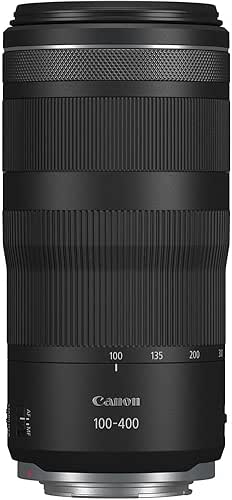
| Best Canon RF | Product Type: Telephoto zoom lens | Mount: Canon RF mount | Zoom Range: 100–400mm | VIEW LATEST PRICE | Read Our Analysis |
| Nikon D7500 DSLR Camera with 18-140mm VR Lens |

| Best DSLR Kit | Product Type: DSLR camera kit | Mount: Nikon F mount | Zoom Range: 18–140mm | VIEW LATEST PRICE | Read Our Analysis |
| Tamron 70-300mm F/4.5-6.3 Di III RXD Lens |
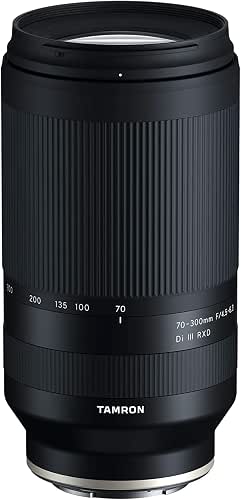
| Best Lightweight Zoom | Product Type: Telephoto zoom lens | Mount: Sony E-mount | Zoom Range: 70–300mm | VIEW LATEST PRICE | Read Our Analysis |
| Kodak PIXPRO Astro Zoom AZ528-BK Digital Camera |
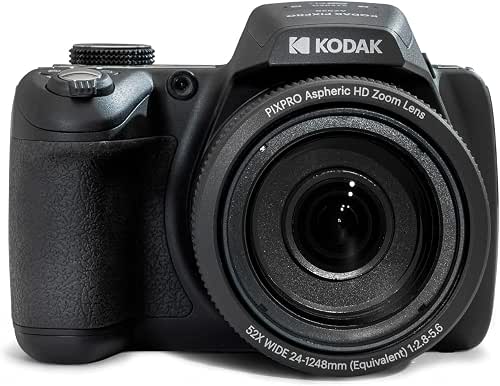
| Best Bridge Camera | Product Type: Digital camera | Mount: Fixed lens | Zoom Range: 52x zoom | VIEW LATEST PRICE | Read Our Analysis |
| Canon RF100-500mm Super-Telephoto Zoom Lens for EOS R |
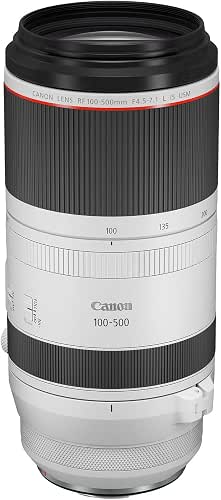
| Best Premium Telephoto | Product Type: Super-telephoto zoom lens | Mount: Canon RF mount | Zoom Range: 100–500mm | VIEW LATEST PRICE | Read Our Analysis |
More Details on Our Top Picks
Nikon AF-S NIKKOR 200-500mm Super Telephoto Zoom Lens (20058)
Should you need the best long-range lens for birding, this Nikon 200-500mm zoom delivers. You get a constant f/5.6 aperture, so your exposure stays steady while you track birds across the frame. Three ED elements help cut color fringing, and Nikon’s SWM autofocus locks on quickly and quietly. VR adds up to 4.5 stops of stabilization, while Sport Mode helps you follow fast flyers. Internal focusing keeps the barrel length fixed, and the rotating tripod collar balances support. The bundle includes a filter kit, lens cap keeper, and cleaning kit.
- Product Type:Telephoto zoom lens
- Mount:Nikon F mount
- Zoom Range:200–500mm
- Autofocus:SWM
- Image Stabilization:VR
- Color:Black
- Additional Feature:Constant f/5.6 aperture
- Additional Feature:4.5-stop VR stabilization
- Additional Feature:Sport Mode shooting
Canon RF100-400mm Telephoto Lens for EOS R Series
Canon RF100-400mm F5.6-8 IS USM gives EOS R birders a light, nimble reach. You get a 100–400mm zoom in a compact 816-gram black lens that mounts directly to EOS R bodies like the R5, R6, R, and RP. Nano USM autofocus stays fast and quiet, while the built-in stabilizer adds up to 5.5 stops, or 6 with IBIS. The 67mm filter thread, 2.89-foot close focus, and 0.41x magnification help you frame perched birds tightly. Add RF tele-extenders for extra reach, and you’ve got a versatile wildlife tool.
- Product Type:Telephoto zoom lens
- Mount:Canon RF mount
- Zoom Range:100–400mm
- Autofocus:Nano USM
- Image Stabilization:IS
- Color:Black
- Additional Feature:5.5-stop IS
- Additional Feature:RF1.4x extender compatible
- Additional Feature:Programmable control ring
Nikon D7500 DSLR Camera with 18-140mm VR Lens
Nikon’s D7500 DSLR kit suits birders who want speed, reach, and dependable autofocus. You get a 20.9 MP APS-C sensor, 8 fps bursts, and a 51-point Multi-CAM 3500FX II system with 15 cross-type points, so you can track erratic birds with confidence. The included 18-140mm VR lens covers 27-210mm equivalent, giving you useful flexibility for fieldwork. Vibration Reduction helps steady handheld shots, while the tilting touchscreen, optical viewfinder, Wi‑Fi, and Bluetooth make shooting easier. You can also record 4K video whenever you desire bird behavior clips.
- Product Type:DSLR camera kit
- Mount:Nikon F mount
- Zoom Range:18–140mm
- Autofocus:51-point AF
- Image Stabilization:VR
- Color:Black
- Additional Feature:20.9 MP sensor
- Additional Feature:4K UHD video
- Additional Feature:51-point AF system
Tamron 70-300mm F/4.5-6.3 Di III RXD Lens
The Tamron 70-300mm F/4.5-6.3 Di III RXD is a lightweight zoom for Sony bird photographers. You get a Sony E-mount lens that works on full-frame and APS-C bodies, so you can match it to your setup. Its 70–300mm range helps you frame birds at useful distances, while the f/4.5–6.3 aperture keeps the design compact. You can focus as close as 31.5 cm at the wide end and 59.1 cm at telephoto. Tamron’s 15-element, 10-group design aims for sharp results, and the moisture-resistant build adds confidence outdoors.
- Product Type:Telephoto zoom lens
- Mount:Sony E-mount
- Zoom Range:70–300mm
- Autofocus:RXD AF
- Image Stabilization:None listed
- Color:Black
- Additional Feature:15 elements
- Additional Feature:Moisture-resistant construction
- Additional Feature:Compact lightweight design
Kodak PIXPRO Astro Zoom AZ528-BK Digital Camera
Kodak’s PIXPRO AZ528-BK is a bridge camera for birders who want serious zoom without swapping lenses. You get a 52x optical zoom with a 24 mm wide-angle start, so you can frame nearby subjects and pull distant birds close with real optical sharpness. The 16 MP BSI CMOS sensor helps in lower light, and OIS keeps handheld telephoto shots steadier at every zoom level. Shoot 6 fps bursts, review them on the 3″ LCD, and record 1080p video. Wi‑Fi, remote control, and a rechargeable battery round out this travel-friendly option.
- Product Type:Digital camera
- Mount:Fixed lens
- Zoom Range:52x zoom
- Autofocus:Autofocus
- Image Stabilization:OIS
- Color:Black
- Additional Feature:52x optical zoom
- Additional Feature:Built-in Wi‑Fi
- Additional Feature:6 fps burst
Canon RF100-500mm Super-Telephoto Zoom Lens for EOS R
Canon’s RF100-500mm F4.5-7.1 L USM suits bird photographers who want premium reach and sharp control. You get a 100–500mm zoom range, L-series optics, and a white super-telephoto build that pairs with Canon EOS R, RP, R5, and R6 bodies. Its Optical Image Stabilization can correct up to 5 stops, and you can choose Standard, Panning, or Exposure-only modes. Dual Nano USM gives you fast, quiet autofocus, while the 0.9 m minimum focus distance helps on close subjects. It’s a strong choice for wildlife, sports, and distant birds.
- Product Type:Super-telephoto zoom lens
- Mount:Canon RF mount
- Zoom Range:100–500mm
- Autofocus:Dual Nano USM
- Image Stabilization:IS
- Color:White
- Additional Feature:L-series optics
- Additional Feature:3 stabilization modes
- Additional Feature:0.9 m minimum focus
Factors to Consider When Choosing a Camera and Telephoto Lens for Bird Photography
Whenever you choose a camera and telephoto lens for bird photography, you need enough focal length reach to frame distant birds without disturbing them. You’ll also want a fast aperture, reliable autofocus, strong image stabilization, and a sensor with solid resolution so you can capture sharp, detailed shots. Balancing these factors helps you match your gear to the birds and conditions you’ll face.
Focal Length Reach
Focal length reach is one of the biggest factors in bird photography, because it determines how tightly you can frame your subject from a given distance. For small to medium birds, you’ll usually do well with about 400–600mm on full-frame, or 300–400mm on APS-C, to fill the frame from a moderate distance. Should you be photographing larger birds, skittish subjects, or birds in open habitats, 600–800mm or more can help you keep extra distance while still getting detailed shots. Be sure to account for crop factor: an APS-C camera increases effective reach, so a 400mm lens acts more like 600mm. Longer lenses also make focusing more demanding, so you’ll need to balance reach with portability, stability, and support.
Aperture Speed
Beyond reach, aperture speed plays a major role in how well your camera and telephoto lens handle birds in motion. You’ll get better results with a wider maximum aperture, such as f/4 or f/2.8, because it lets in more light and helps you use faster shutter speeds. That matters whenever you need 1/1000s to 1/4000s to freeze wingbeats, plunges, and sudden turns. Keep in mind that each stop changes light by half or double, so moving from f/5.6 to f/4 gives you about one stop more speed. Still, don’t ignore depth of field: very wide apertures can make small birds harder to keep fully sharp. In low light, prioritize aperture speed, then raise ISO and shoot bursts.
Autofocus Performance
Autofocus performance can make or break bird photography, especially while you’re tracking birds in flight. You’ll want fast continuous AF-C that keeps up at 8+ frames per second without hunting. A camera with a dense spread of autofocus points, especially cross-type and phase-detection points, helps you lock onto small birds even during moments they’re off-center. Predictive tracking also matters; eye and animal detection, plus adjustable AF sensitivity, can keep subjects sharp throughout sudden turns and distance changes. Don’t overlook low-light AF performance either, because dawn, dusk, and shaded habitats demand reliable focus in dim conditions. For lenses, choose quiet, fast focus motors and internal focusing designs so you get quicker acquisition, less focus lag, and fewer distractions to nearby birds.
Image Stabilization
Keeping your subject steady is just as vital as finding it, and image stabilization can make a big difference in bird photography. You’ll benefit most from systems that counter angular shake, since long lenses magnify every movement at 300–600mm equivalents. Good stabilization can give you about 3–5 stops of extra handheld flexibility, letting you shoot at slower shutter speeds without losing framing control. Should your camera and lens both offer stabilization, look for coordinated IBIS and optical IS, because they can add even more correction when they’re designed to work together. Use the right mode: standard for most scenes, panning mode for horizontal flight, and exposure-only mode whenever you’re already using very fast shutter speeds. Even then, you’ll still need fast shutter speeds to freeze wingbeats.
Sensor Resolution
Sensor resolution matters because it determines how much room you’ve got to crop whenever a distant bird won’t fill the frame. Should you choose a 20+ MP APS-C body or a 24+ MP full-frame camera, you can trim tightly and still keep enough detail for prints or sharp web images. APS-C also gives you extra effective reach, so the same megapixel count can feel more forgiving than on full-frame. But don’t chase megapixels blindly: high-density sensors demand better lenses and solid technique, or you’ll reveal softness and aberrations. They also create larger files, so you’ll need faster cards, more storage, and more processing power. In low light, very small pixels can raise noise and reduce tonal range unless the sensor handles ISO well.
Burst Shooting Rate
Burst shooting rate matters because it increases your chances of freezing the exact wingbeat, head turn, or quick direction change that makes a bird photo stand out. You’ll want at least 8–10 fps for small, erratic birds, since a higher frame rate gives you more chances to catch the peak action. But don’t chase fps alone: you need a deep buffer and fast UHS-II or CFexpress card support so the camera doesn’t stall mid-sequence. Make sure continuous AF tracking stays accurate during bursts, and check that exposure remains consistent. Short shutter lag and minimal viewfinder blackout help you follow the bird precisely. For long telephoto work, confirm the camera can sustain bursts without overheating or losing stabilization, because both can affect sharpness and stop a critical sequence.
Lens Weight
Lens weight can make or break your bird photography sessions, especially once you’re carrying the camera and lens for hours. In case you choose a telephoto that weighs 1.2 kg / 2.6 lb or more, you’ll usually gain reach and a brighter aperture, but you’ll also feel the strain sooner. For long outings, that extra mass can push you toward a monopod, gimbal head, or sturdy tripod with a balanced collar. A lighter lens under 1 kg / 2.2 lb keeps you nimble, lets you track fast birds more easily, and works better for handheld shooting, though you might give up some reach or stabilization. Don’t forget the camera body too: together, they need to stay comfortable for your typical session. Should you hike or travel, even a few hundred grams less can noticeably improve endurance and shooting time.
Weather Sealing
Weather sealing matters because bird photography often puts you in rain, fog, mist, and dusty conditions. You should look for full sealing: gaskets at the mount, sealed switches, and internal barriers that block moisture and grit from reaching electronics and lubricants. Dust- and drip-resistant cameras and lenses let you keep shooting through light rain or mist without stopping to dry gear, which saves time on long outings. Still, weather sealing isn’t waterproofing, so don’t trust it in heavy rain, submersion, or with open ports and doors. Inspect rubber seals regularly, keep contacts clean, and service gear provided controls feel sticky. Add rain covers, plastic bags, silica gel, and microfiber towels for extra protection.
Frequently Asked Questions
How Important Is Autofocus Speed for Photographing Birds in Flight?
Autofocus speed is vital for birds in flight because you need quick lock on and tracking to keep sharp shots. You will miss fewer opportunities, especially with erratic subjects, and fast AF lets you react confidently.
What Minimum Shutter Speed Works Best for Sharp Bird Photos?
You’ll usually need at least 1/1000 sec for sharp bird photos; many photographers use 1/1600. Studies show tiny wingbeats blur fast, so you’ll raise shutter speed whenever birds move unpredictably, especially in flight.
Do Weather-Sealed Lenses Matter for Bird Photography Outdoors?
Yes, you will benefit outdoors, especially in rain, mist, dust, or beach spray. You can keep shooting longer and protect your gear better. They are not mandatory, but they are smart insurance for bird photography.
How Much Focal Length Is Ideal for Photographing Small Birds?
Birds of a feather flock together, but you’ll usually want 400 to 600 mm for small birds. You’ll fill the frame from a respectful distance, and 800 mm helps whenever subjects stay skittish or far away.
Is Image Stabilization Necessary for Handheld Bird Photography?
Not strictly, but you will benefit from it whenever you shoot handheld. You can freeze motion with fast shutter speeds, yet stabilization helps you frame more steadily and reduce shake, especially with longer telephoto lenses.
Wrap Up
As you choose your bird photography gear, consider it like picking the right wings for your voyage. The Nikon and Canon telephotos offer the soaring reach you need, while the Nikon D7500 and Tamron keep you nimble in the field. Should you want simplicity, the Kodak bridge camera can still carry you forward. Let your lens be a compass, your autofocus a steady wind, and your camera the nest where every fleeting feather becomes a lasting memory.