7 Best Bird Nets for Garden in 2026
Bird nets help protect garden fruits and vegetables from birds and some larger pests. The right net should have a mesh size suited to the crop and use UV-stable material for outdoor durability.
Fine mesh works well for berries and grapes, while stronger netting suits trees and larger beds. Good installation matters, since loose netting can trap birds or sag under wind.
Here are seven reliable bird nets for gardens in 2026.


More Details on Our Top Picks
GWHOLE Bird Netting for Garden Tree Protection
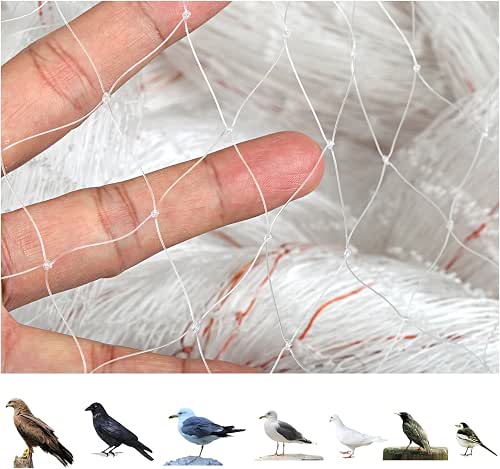
Should you want one net that handles almost everything, GWHOLE stands out as the all-around pick. You get a 33 x 13 ft white net made from durable nylon monofilament that resists tears and UV damage. It holds up in harsh sun, storms, and every season. The 1 x 1 inch mesh keeps birds, chickens, deer, and other large animals away while still letting sunlight, rain, and air reach your plants. You can cut it cleanly to fit trees, beds, orchards, or fences, and it won’t fray. It’s not meant for small insects, though.
- Net Size:33 x 13 ft
- Mesh Size:1 x 1 inch
- Material:Nylon monofilament
- UV Resistance:UV-resistant
- Cuttable:Yes
- Reusable:Year-round use
- Additional Feature:1 x 1 mesh
- Additional Feature:All-season protection
- Additional Feature:For large animals
GonLei Garden Netting for Pest Protection (10 x 50 FT)
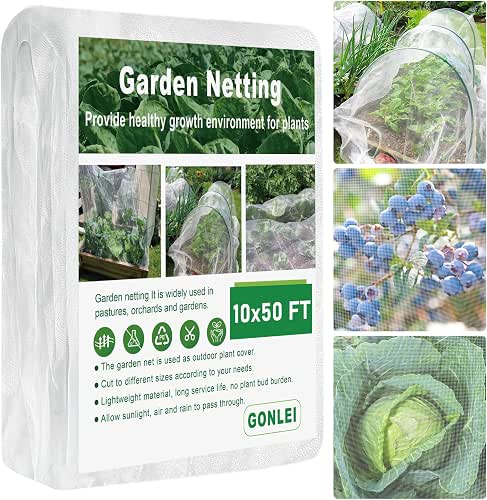
GonLei’s 10 x 50 FT ultra-fine netting is ideal should you want insect defense without blocking sunlight. You get a see-through, white-toned barrier that lets air, water, and light pass through, so your plants can keep photosynthesizing. Use it over raised beds, orchards, or garden rows to shield cabbage, tomatoes, peaches, and berries from squirrels, rabbits, chipmunks, and mosquitoes. Because it’s made from stabilized PE and nylon, it’s durable with care. Drape it over crops, secure the edges with stones or clips, and cut it to size as needed.
- Net Size:10 x 50 ft
- Mesh Size:0.04-inch
- Material:Nylon/PE
- UV Resistance:Stabilized PE
- Cuttable:Yes
- Reusable:Future seasons
- Additional Feature:60 mesh per inch
- Additional Feature:Mosquito barrier use
- Additional Feature:Includes securing clips
Bird Netting for Garden Heavy Duty Anti-Bird Mesh
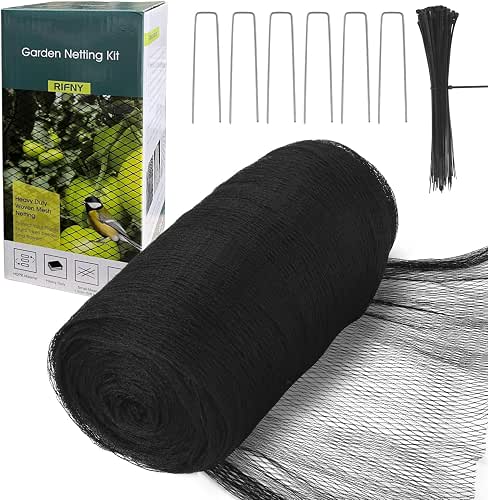
Should you need tough garden protection, this heavy-duty anti-bird mesh delivers reliable coverage. You get a 13 x 40 ft sheet made from HDPE, a durable material often used in wire and cable work. Its 5/8-inch mesh keeps birds, poultry, and small animals from pushing through or getting tangled. You can trim it with scissors, wrap it around trees, or build enclosures for beds. It resists UV damage, rot, and aging, works from -58°F to 212°F, and reuses well. Six staples and twist ties help you install it fast.
- Net Size:13 x 40 ft
- Mesh Size:5/8 inch
- Material:HDPE
- UV Resistance:Anti-UV
- Cuttable:Yes
- Reusable:Reusable
- Additional Feature:7-inch staples included
- Additional Feature:Twist ties included
- Additional Feature:Winter temperature range
SnugNiture Garden Netting for Plants and Fruits
SnugNiture’s ultra-fine mesh suits gardeners who want lightweight, all-around crop protection. You get a 10 x 33-foot white net with 0.1 mm square openings that block insects, birds, deer, and squirrels while still letting water, sunlight, and air through. Because it’s made from durable mesh cloth and PE, it resists deformation, breakage, sun, and water for outdoor use. At just 1.23 pounds, you can drape it directly over plants, cut it to size, and secure the edges with soil, stones, or nails. Use it in gardens, orchards, beds, or greenhouses.
- Net Size:10 x 33 ft
- Mesh Size:0.1 mm x 0.1 mm
- Material:PE mesh cloth
- UV Resistance:Sun-proof
- Cuttable:Yes
- Reusable:Long-term use
- Additional Feature:Safe over plants
- Additional Feature:Waterproof and sun-proof
- Additional Feature:Direct ground securing
Bird Netting Pest Barrier for Plants and Fruit Trees
In case you need broad garden protection, this bird netting fits the job. You can shield plants, fruit trees, vegetables, berries, and raised beds from birds, deer, squirrels, rabbits, raccoons, opossums, and more. The woven, diamond-pattern mesh weighs just 0.7 oz/m², yet it’s strong enough to support over 100 pounds. Its 1-inch openings block most birds while still letting you water through it. You can unfold it easily, cut it to size, and stretch it for custom coverage. UV-resistant, corrosion-resistant, and reusable, it helps enhance long-term harvests.
- Net Size:Not specified
- Mesh Size:1 inch
- Material:Woven mesh
- UV Resistance:UV-resistant
- Cuttable:Yes
- Reusable:Years of use
- Additional Feature:Supports 100 pounds
- Additional Feature:Diamond mesh pattern
- Additional Feature:No watering removal
Bird Netting 25×25 Ft Heavy Duty Pest Barrier
Need broad, durable protection? You can wrap your garden with this 25×25 ft heavy-duty bird netting to shield plants, fruit trees, vegetables, and berries from birds, deer, squirrels, rabbits, raccoons, opossums, and more. Its 1/2-inch diamond mesh lets water pass through, so you won’t need to remove it for watering. The woven, UV-resistant, corrosion-resistant design supports over 100 pounds and resists tearing. You can use it for raised beds, patios, chicken coops, or fruit tree covers, and cut it to size. Reminder: the mesh can stretch, changing dimensions slightly.
- Net Size:25 x 25 ft
- Mesh Size:1/2 inch
- Material:Woven mesh
- UV Resistance:UV-resistant
- Cuttable:Yes
- Reusable:Years of use
- Additional Feature:1/2-inch mesh
- Additional Feature:100-pound support
- Additional Feature:Decorative wall use
Heavy Duty Bird Netting for Plants and Trees
Should you need heavy-duty protection for plants and trees, this premium shield fits the bill. You can use this woven 1 oz/m² netting to guard fruit trees, vegetables, raised beds, patios, and coops from birds, deer, squirrels, rabbits, raccoons, opossums, and hawks. Its 1/2-inch diamond mesh blocks most birds and deters small pests, while the stretchy design resists tearing. You can cut it to size, and water passes through easily. UV, corrosion, and aging resistance help it last for seasons, so you’ll enhance harvest quality and quantity with less hassle.
- Net Size:Not specified
- Mesh Size:1/2 inch
- Material:Woven mesh
- UV Resistance:UV-resistant
- Cuttable:Yes
- Reusable:Years of use
- Additional Feature:Hawks protection
- Additional Feature:Poultry predator barrier
- Additional Feature:Improves harvest quality
Factors to Consider When Choosing a Bird Net for Garden
Whenever you choose a bird net for your garden, check the mesh size and coverage so it fits your plants and keeps birds out. You should also look for durable, weather-resistant material that can handle sun, rain, and wind over time. In case you want broader protection, make sure it also helps with other pests and is easy to install.
Mesh Size And Coverage
Mesh size matters because you want enough openness for sunlight, rain, and airflow without leaving gaps for pests. Choose about 1 inch openings for birds and larger mammals, 1/2 inch or smaller for smaller birds and rodents, and ultra-fine 0.04 inch mesh when you need to block insects and mosquitoes. Measure coverage so the net extends several feet beyond your plant or tree canopy on every side; that extra reach lets you secure the edges and avoids entry points. Should you be trimming netting, square or 1×1 inch mesh is easier to cut cleanly, while diamond styles can stretch under tension, so account for that shift. Around tall trees or odd shapes, plan overlaps and fastening points to keep the barrier tight and continuous.
Material Durability
After you’ve sized the mesh and coverage, the next thing to check is how well the net will hold up outdoors. You should choose UV-resistant, anti-aging materials like stabilized PE, HDPE, or UV-treated nylon so your net lasts through multiple seasons without breaking down. Look for a higher gauge and a weight around 20–28 g/m² or more, since that usually means better tear resistance and stronger load support. You’ll also want rot- and corrosion-resistant construction that stays flexible in both cold and heat. In case you need to trim the net, pick monofilament or welded styles that won’t come apart. Finally, check the mesh pattern: diamond or woven designs can stretch and absorb stress, while ultra-fine meshes often need more delicate, less abrasion-resistant fibers.
Weather Resistance
Weather resistance matters just as much as mesh size, because sun, rain, wind, and temperature swings can quickly weaken poor-quality netting. You should pick UV-resistant options like stabilized PE, HDPE, or UV-treated nylon so direct sunlight doesn’t break them down in one season. Check the material’s temperature range too; provided it stays flexible from below freezing to over 200°F, it’s less likely to crack or turn brittle. For damp or rainy climates, choose fabrics that resist rot, mildew, and corrosion so they keep their strength. You’ll also want colorfast, high-tensile netting that can handle wind, heavy rain, or snow without sagging or tearing. For year-round use, go with weatherproof, fade-resistant nets to cut maintenance and replacements.
Pest Protection Range
To get real protection, match the net to the pest you’re trying to stop: ultra-fine mesh around 0.04 in blocks insects and mosquitoes, 1 x 1 in or 5/8 in mesh stops most birds, and 1/2 in or diamond-shaped 0.5 in mesh helps deter small mammals like squirrels and rabbits. You should also consider exclusion, not just blocking. Choose smooth monofilament or HDPE netting with openings small enough to prevent birds from getting trapped. Should deer, raccoons, or opossums be a threat, pick a stronger woven net with high tensile strength and some elasticity. For crops that face repeated pressure, use UV- and rot-resistant netting during planting, flowering, and fruiting seasons, so you keep protection consistent all year.
Ease Of Installation
Whenever you’re choosing a bird net for your garden, ease of installation can save you a lot of time and frustration. You’ll want lightweight netting that unfolds smoothly and doesn’t tangle, so you can position it fast without fighting knots. Pick material you can cut cleanly to size without coming apart; that lets you trim around trees, raised beds, or odd corners and get a neat fit. Check for included or compatible stakes, clips, ties, or staples, or be ready to anchor edges with soil or rocks to block gaps and wind lift. Flexible, stretchy mesh also helps because it drapes over branches and frames, reducing the need for complex supports. Finally, choose UV-resistant, weatherproof netting so it holds up longer and needs fewer reinstallations.
Custom Fit Options
Whenever you’re choosing bird netting for a garden, custom fit matters because a proper size helps keep birds out without leaving gaps. You should measure the height, width, and, for trees or odd beds, the circumference, then add 10–20% extra for overlap and anchoring. Pick netting you can trim cleanly, like monofilament or welded and knitted styles, so it won’t come apart when you cut around posts or branches. In case you’re covering tall shrubs or canopies, leave 2–4 feet of slack so wind and growth won’t tear the mesh. Use staples, pins, clips, or buried edges every 12–18 inches. For large areas, overlap panels 6–12 inches and fasten the seams tightly with ties or clips.
Frequently Asked Questions
How Long Does Bird Netting Typically Last Outdoors?
You’ll typically get 2 to 5 years outdoors, depending on UV exposure, weather, and material quality. If you install it securely, inspect it regularly, and replace damaged sections, you can extend its lifespan considerably.
Can Bird Netting Harm Beneficial Insects in My Garden?
Yes, you can harm beneficial insects if your netting traps them or blocks access to flowers. You can reduce the risk by keeping the mesh taut, lifting it off plants, and checking it regularly for hitchhikers.
Is Bird Netting Reusable After One Growing Season?
Yes, you can usually reuse bird netting after one growing season provided you remove it carefully, clean it, dry it, and store it well. Inspect for tears, UV damage, and stretched mesh before reinstalling.
How Do I Remove Bird Netting Without Damaging Plants?
Like untying a stubborn knot, you’ll cut the net into sections, lift it gently, and free each anchor one at a time. Support stems with your other hand, then roll the mesh away slowly.
What’s the Best Way to Store Bird Netting During Winter?
You should clean, dry, and loosely roll the netting, then store it in a breathable bag or lidded bin indoors. You will prevent mildew, UV damage, and tangles, and it will last much longer.
Wrap Up
You want protection, not a hassle, and the best bird net gives you both. Light mesh is easy to cut and set, yet heavy-duty netting stands firm through wind, sun, and repeated seasons. Choose fine enough to block pests, but open enough to spare your plants from stress. Secure it well, and you’ll spend less time repairing damage and more time enjoying fruit, flowers, and a garden that stays safe, neat, and productive.