6 Best Cameras for Bird Watching in 2026
Bird watching cameras in 2026 come in many styles, from smart feeders to trail cameras and digital binoculars. Some give live video, while others focus on crisp photos and low-light performance.
Species ID is built into a few models, though accuracy depends on the camera and conditions. Choice comes down to where the birds are and how you plan to use the camera.
This guide covers the best options for different birdwatching needs.
| Soliom Bird Feeder with Camera Solar Powered (BF08) |
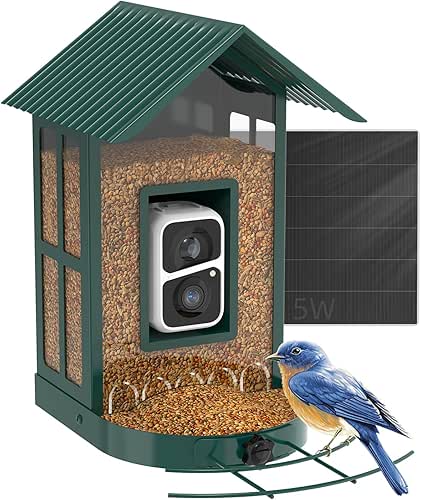
| Best Overall | Camera Resolution: 2K | Solar Power: Yes | AI Identification: 10,000+ species | VIEW LATEST PRICE | Read Our Analysis |
| Smart Bird Feeder with Camera Solar 2K HD |
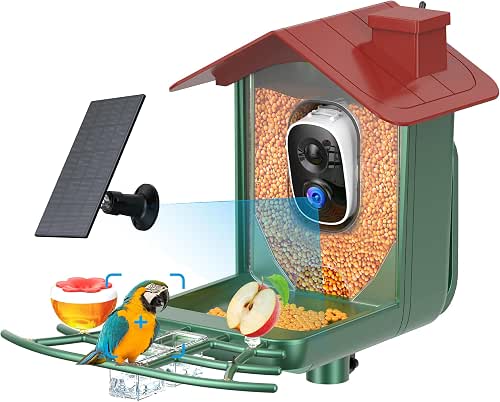
| Easy Setup | Camera Resolution: 2K HD | Solar Power: Yes | AI Identification: AI recognition | VIEW LATEST PRICE | Read Our Analysis |
| 12×32 Digital Binoculars with Camera and LCD Display |

| Best Optics | Camera Resolution: 48MP / 2.5K | Solar Power: No | AI Identification: No | VIEW LATEST PRICE | Read Our Analysis |
| GardePro E5S Trail Camera (Non-Cellular Non-WiFi) |

| Best Trail Camera | Camera Resolution: 64MP / 1296P HD | Solar Power: Optional panel | AI Identification: No | VIEW LATEST PRICE | Read Our Analysis |
| HIXX x COOLFLY Bird Feeder with Camera |

| Best Features | Camera Resolution: 4MP / 2.5K UHD | Solar Power: Yes | AI Identification: 10,000 species | VIEW LATEST PRICE | Read Our Analysis |
| HIXX Smart Bird Feeder with Camera AI Identification |
| Best AI Bird ID | Camera Resolution: 4MP / 2.5K | Solar Power: Yes | AI Identification: 10,000 species | VIEW LATEST PRICE | Read Our Analysis |
More Details on Our Top Picks
Soliom Bird Feeder with Camera Solar Powered (BF08)
In case you want a smart feeder that does it all, Soliom’s BF08 stands out as the best overall pick. You get instant bird-arrival alerts with snapshot images, plus automatic photo and video capture whenever visitors land. The 2K live view in the Soliom Pro app lets you watch in real time, while AI identifies 10,000+ species and shows useful details. You can talk through two-way audio, trigger a siren, or use the spotlight. A 5W solar panel, 5000mAh battery, 2.7L seed bin, and chew-proof metal build keep it running outdoors.
- Camera Resolution:2K
- Solar Power:Yes
- AI Identification:10,000+ species
- Two-Way Audio:Yes
- Storage:Not specified
- Mounting:Freestanding / pole / wall
- Additional Feature:10,000+ bird recognition
- Additional Feature:Squirrel-chew-proof metal
- Additional Feature:2.7 L seed capacity
Smart Bird Feeder with Camera Solar 2K HD
Assuming you want crisp bird close-ups without complicated setup, this solar 2K HD feeder fits. You get a solar-powered, wireless bird feeder camera with 2K live video, AI recognition, and a visible window that helps you spot visitors fast. After WiFi setup, you can stream birds anytime, capture feather detail, and share clips across 10+ accounts. Two-way audio lets you hear or shoo away squirrels and raccoons. The feeder includes a food reservoir, perch, hanging kit, and weatherproof, rainproof build for tree mounting.
- Camera Resolution:2K HD
- Solar Power:Yes
- AI Identification:AI recognition
- Two-Way Audio:Yes
- Storage:Not specified
- Mounting:Tree mount
- Additional Feature:Visible window design
- Additional Feature:More than 10 accounts
- Additional Feature:Rain proof build
12×32 Digital Binoculars with Camera and LCD Display
Should you want sharp bird views and instant photo review, these 12×32 digital binoculars suit you well. You get 12×32 magnification, large eyepieces, and a BAK4 prism that enhances light transmission while cutting distortion. That means crisp, vivid images even in low light. The built-in camera captures 48MP photos and 2.5K video, so you can document sightings easily. Use the 2.4″ LCD to check shots right away, and the included 32GB micro SD card handles storage. Lightweight, compact, and durable, they’re great for birding, wildlife, and outdoor trips.
- Camera Resolution:48MP / 2.5K
- Solar Power:No
- AI Identification:No
- Two-Way Audio:No
- Storage:32GB micro SD
- Mounting:Handheld
- Additional Feature:48MP photo capture
- Additional Feature:2.4-inch LCD display
- Additional Feature:32GB micro SD
GardePro E5S Trail Camera (Non-Cellular Non-WiFi)
Provided you want a rugged, offline bird camera, the GardePro E5S stands out for you. You get 64 MP photos, 1296P HD video, and a 0.1-second trigger, so you won’t miss quick feeders. Its three PIR sensors and 120-degree view help you cover a wide area, while no-glow infrared reaches 100 feet for discreet night watching. You’ll store clips on an SD card, then transfer files via mini-USB. It runs on 8 AA batteries, or you can add GardePro’s SP350 solar panel. IP66 sealing and camouflage make it ready for harsh outdoor use.
- Camera Resolution:64MP / 1296P HD
- Solar Power:Optional panel
- AI Identification:No
- Two-Way Audio:No
- Storage:SD card
- Mounting:Tree / wall / strap
- Additional Feature:0.1-second trigger
- Additional Feature:100-foot night vision
- Additional Feature:IP66 waterproof rating
HIXX x COOLFLY Bird Feeder with Camera
The HIXX x COOLFLY bird feeder with camera shines for bird lovers who want hands-free watching. You get a 4MP HD camera that streams 2.5K UHD video to your phone, plus auto-recording and instant alerts whenever birds land. Dual storage keeps clips in the cloud for three days and on microSD locally. A 4400mAh battery and solar panel help it run sustainably, while the weatherproof body handles rain, snow, and heat. Its 2.3L seed chamber, squirrel-blocking tray, AI ID, and COOLFLY app make tracking easy.
- Camera Resolution:4MP / 2.5K UHD
- Solar Power:Yes
- AI Identification:10,000 species
- Two-Way Audio:No
- Storage:Cloud + microSD
- Mounting:Wall / tree / freestanding
- Additional Feature:Integrated solar night light
- Additional Feature:2.3 L seed chamber
- Additional Feature:Fold-away tray design
HIXX Smart Bird Feeder with Camera AI Identification
HIXX’s smart feeder suits you should you desire live bird views and free AI species recognition. You get a 4MP HD camera with a 2.5K live stream to your phone, plus auto-recording and real-time alerts whenever birds arrive. The app’s free AI can identify up to 10,000 species with no subscription. You also get cloud sync, microSD backup, and a solar-powered, weatherproof body with a 4400mAh battery. Its 2.3L chamber, squirrel guard, rotating tray, and integrated solar night light help you feed birds efficiently all year.
- Camera Resolution:4MP / 2.5K
- Solar Power:Yes
- AI Identification:10,000 species
- Two-Way Audio:No
- Storage:Cloud + microSD
- Mounting:Wall / tree / freestanding
- Additional Feature:Integrated solar night light
- Additional Feature:2.3 L seed chamber
- Additional Feature:Fold-away tray design
Factors to Consider When Choosing Cameras For Bird Watching
At the moment you choose a camera for bird watching, you’ll want sharp image quality and fast recognition speed so you don’t miss key moments. You should also check power options and storage capacity so the camera can run reliably and save plenty of footage. Since birding frequently happens outdoors, weather durability matters too.
Image Quality
Image quality is the difference between spotting a bird and truly identifying it. You’ll want at least a 2K sensor or video mode, and 12–20+ megapixels for stills, so you can see feather texture, eye rings, and subtle color shifts. Use higher magnification, around 10x to 12x or more, with quality glass and BAK-4 prisms or similar coatings to keep distant subjects sharp and contrasty. For dawn, dusk, and shaded woods, pick a camera with strong low-light performance, a larger aperture, and solid tonal range. Optical stabilization helps cut blur, while lossless photo or video files preserve detail for later cropping. Fast autofocus plus 30–60 fps or burst shooting also helps you capture crisp behavior sequences.
Detection Speed
Sensing speed, or trigger time, is how quickly your camera starts recording after it senses motion, and it can make the difference between catching a bird in frame or missing the moment entirely. You’ll want a camera that reacts in 0.2 seconds or less when you photograph small, fast birds, since they might land and leave almost instantly. Sensor design matters too: multiple PIR sensors or wide-angle detectors, placed at eye level with feeder flight paths, help you catch more approaches. Watch for false triggers from wind, heat, or moving branches, and choose adjustable sensitivity and debounce controls to fine-tune performance. Pre-buffering also helps, because it records a few seconds before activation, so you don’t lose the bird’s first wingbeat or landing approach.
Power Options
Power matters just as much as image quality, especially should you want a camera to run unattended for days or weeks. You should compare solar-powered models with built-in panels and rechargeable backups against battery-only cameras. Solar can stretch runtime, but it still depends on available sunlight, so don’t assume it’ll work equally well in every spot. Check battery capacity and claimed runtime, including mAh ratings and expected days, so you know how long you can monitor between charges or swaps. Make sure the camera supports the power sources you plan to use, whether that’s USB, a DC adapter, a power bank, or an external solar panel. For remote sites, choose low-power modes and motion-triggered recording. In cold climates, pick low-temperature batteries or larger, insulated power setups.
Storage Capacity
Storage capacity can make or break a bird camera setup, especially should you plan to record 2K–4K video or capture 20–48MP photos over long outings. You’ll want at least 64–128 GB of local storage, and more should you shoot often. Check file formats and bitrates, because 2.5K/4K clips can eat 1–3 GB every 10–15 minutes. A camera that accepts removable microSD cards up to 256 GB or 512 GB gives you room to grow and makes field offloads easier. Dual storage helps too: keep files on the card and transmit a short-term cloud backup for rare sightings. Utilize motion-triggered capture or loop recording whenever possible, since it cuts space use far more than continuous high-resolution recording.
Weather Durability
Weather durability matters because your bird camera has to work through rain, wind, humidity, heat, and cold without failing. You should look for at least an IP66 rating so dust and heavy spray won’t stop your camera during storms or wet marshes. Pick housings made from stainless steel, anodized aluminum, or UV-stabilized polymers to resist rust, cracking, and sun damage. Make sure the camera and battery can operate in your local temperature range, especially when winters dip to -20°C or summers climb to 50°C. Choose sealed or vented designs with drainage channels and anti-fogging features to keep lenses clear after sudden temperature shifts. Should you rely on solar or battery power, confirm the batteries and charging parts handle wet conditions and temperature cycling, and have enough capacity for cloudy stretches too.
Frequently Asked Questions
How Do I Clean Bird Feeder Cameras Safely?
You clean bird feeder cameras safely by powering them off, removing the batteries, and wiping the lenses with a microfiber cloth. Use a slightly damp cloth for the housing, avoid sprays, and dry everything before reinstalling.
Can Bird Cameras Work During Heavy Rain?
Yes, but only if you choose a weather sealed camera. Otherwise, rain can act like a curtain that blinds it. You will get better results with sheltered placement, a lens hood, and quick drying afterward.
What Memory Card Size Do Bird Cameras Need?
You’ll usually want a 32GB to 128GB memory card for bird cameras, depending on video length and resolution. Should you shoot lots of clips, choose 256GB or higher so you do not run out quickly.
Are Bird Watching Cameras Legal in Public Parks?
Yes, you can usually use birdwatching cameras in public parks, but you should check local rules, avoid disturbing wildlife, and respect privacy. Some parks ban tripods, drones, or filming in restricted areas.
How Long Do Bird Camera Batteries Usually Last?
You’ll usually get 200 to 800 shots per charge, though cold weather and video can shorten that. Like a lantern in winter, your battery fades faster whenever you keep the camera awake.
Wrap Up
Ultimately, you’ll get the best bird-watching experience whenever you match the camera to how you watch. In case you’re worried that smart feeders or trail cams could feel too specialized, keep in mind that each one solves a different problem—close-up feeder shots, fast motion capture, or portable field viewing. Choose the model that fits your space, budget, and goals, and you’ll miss fewer moments and enjoy sharper, more useful bird footage every day.