6 Best Camera Body for Bird Photography in 2026
For bird photography, a fast, accurate camera body matters more than almost anything else.
The Canon EOS R5 offers sharp detail, quick burst shooting, and strong autofocus. Nikon’s Z8 and Z9 are top picks for serious bird shooters.
Older models like the Nikon D850 and Canon 5D Mark IV can still work well with the right lens.
Your best choice depends on budget, autofocus needs, and the lens system you already use.
| Canon EOS 5D Mark IV DSLR Camera (Body Only) |

| Best All-Around | Camera Type: DSLR | Sensor Size: Full-frame | Megapixels: 30.4 MP | VIEW LATEST PRICE | Read Our Analysis |
| Canon EOS RP Full-Frame Mirrorless Camera Kit (3380C132) |
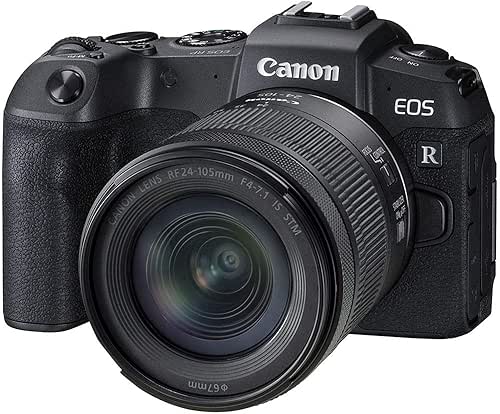
| Best Travel Pick | Camera Type: Mirrorless | Sensor Size: Full-frame | Megapixels: 26.2 MP | VIEW LATEST PRICE | Read Our Analysis |
| Nikon D850 FX-Format Digital SLR Camera Body |

| High-Resolution Pro | Camera Type: DSLR | Sensor Size: Full-frame | Megapixels: 45.7 MP | VIEW LATEST PRICE | Read Our Analysis |
| Canon EOS R5 Mirrorless Camera (Body Only) |
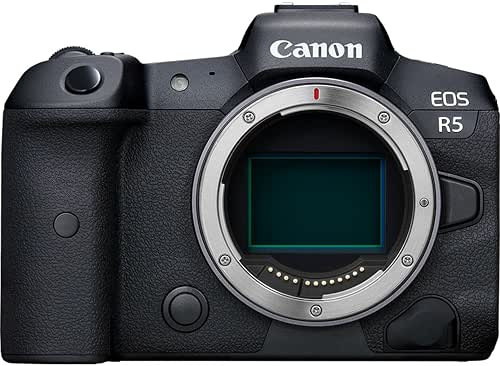
| Fastest Performer | Camera Type: Mirrorless | Sensor Size: Full-frame | Megapixels: 45 MP | VIEW LATEST PRICE | Read Our Analysis |
| Canon EOS R100 Mirrorless Camera Kit |
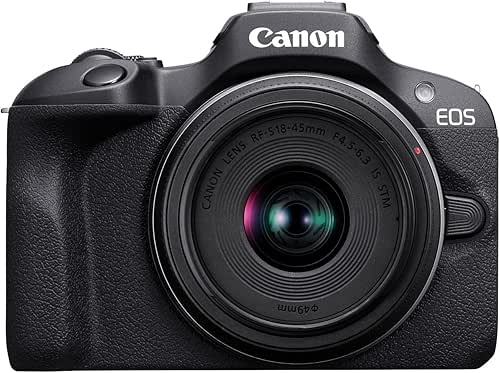
| Best Entry-Level | Camera Type: Mirrorless | Sensor Size: APS-C | Megapixels: 24.1 MP | VIEW LATEST PRICE | Read Our Analysis |
| Canon EOS 70D Digital SLR Camera (Body Only) |
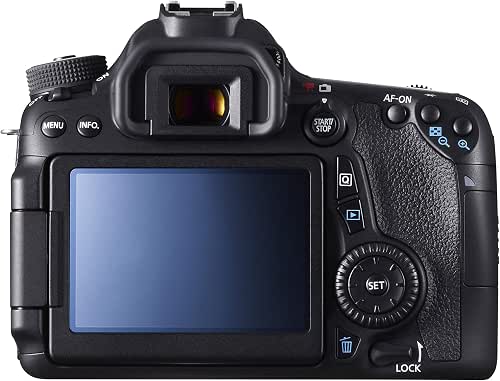
| Reliable Classic | Camera Type: DSLR | Sensor Size: APS-C | Megapixels: 20.2 MP | VIEW LATEST PRICE | Read Our Analysis |
More Details on Our Top Picks
Canon EOS 5D Mark IV DSLR Camera (Body Only)
Assuming you want an all-around birding body, the Canon EOS 5D Mark IV balances speed, detail, and versatility. You get a 30.4-megapixel full-frame sensor that captures crisp feathers and holds up in low light. The DIGIC 6+ processor lets you shoot up to 7 fps, so you can track quick wingbeats. Its ISO range runs from 100 to 32000, expandable to 102400 whenever conditions get tough. For video, you can record 4K at 30 or 24 fps. Dual Pixel CMOS AF keeps live view smooth, and built-in Wi-Fi streamlines transfers.
- Camera Type:DSLR
- Sensor Size:Full-frame
- Megapixels:30.4 MP
- Autofocus:Dual Pixel CMOS AF
- Video Resolution:4K
- Connectivity:Wi‑Fi
- Additional Feature:DIGIC 6+ processor
- Additional Feature:4K Motion JPEG
- Additional Feature:Touchscreen LCD
Canon EOS RP Full-Frame Mirrorless Camera Kit (3380C132)
Provided that you want a lightweight birding setup, the Canon EOS RP is a smart travel pick. You get a full-frame mirrorless body with the RF24-105mm F4-7.1 IS STM lens, so you can cover nearby wildlife and wider scenes without bulky gear. The compact black kit slips easily into a day bag, and the lens’s 5-stop stabilization helps you shoot handheld. You’ll also appreciate smooth STM autofocus, 4K UHD video, and webcam support for field updates. Its close-focusing ability adds flexibility whenever birds won’t approach.
- Camera Type:Mirrorless
- Sensor Size:Full-frame
- Megapixels:26.2 MP
- Autofocus:Canon AF
- Video Resolution:4K UHD
- Connectivity:Wi‑Fi/Bluetooth
- Additional Feature:RF24-105mm lens included
- Additional Feature:Up to 5-stop stabilization
- Additional Feature:Clean HDMI output
Nikon D850 FX-Format Digital SLR Camera Body
Provided that you want a high-resolution pro body for birds, the Nikon D850 delivers exceptional detail and speed. You get a 45.7-megapixel full-frame BSI sensor with no optical low-pass filter, so your feathers, eyes, and fine plumage stay crisp. Its outstanding tonal range helps you recover shadows and highlights, and moiré isn’t a real concern. You can shoot up to 9 fps with full AF performance, and the focus shift mode helps with precision. Use 4K video, 8K time-lapse, 120 fps slow motion, and the tilting touchscreen. Battery life is excellent, too.
- Camera Type:DSLR
- Sensor Size:Full-frame
- Megapixels:45.7 MP
- Autofocus:153-point AF
- Video Resolution:4K UHD
- Connectivity:PictBridge
- Additional Feature:No optical low-pass filter
- Additional Feature:9 fps shooting
- Additional Feature:8K time-lapse movie
Canon EOS R5 Mirrorless Camera (Body Only)
For bird photographers, the Canon EOS R5 is the fastest performer. You get a 45-megapixel stacked, back-side illuminated full-frame sensor that delivers sharp detail and excellent low-light results. The DIGIC X processor gives you native ISO 100–51200, expandable to 102400, while keeping noise down and speed high. You can shoot up to 12 fps with the mechanical shutter or 20 fps silently. Dual Pixel CMOS AF with 1,053 points tracks birds across nearly the whole frame, and Eye Control AF helps you lock focus fast. 8K RAW and 4K/120p video add serious versatility.
- Camera Type:Mirrorless
- Sensor Size:Full-frame
- Megapixels:45 MP
- Autofocus:1,053-point AF
- Video Resolution:8K
- Connectivity:None listed
- Additional Feature:45-megapixel stacked sensor
- Additional Feature:1,053 AF points
- Additional Feature:Eye Control AF
Canon EOS R100 Mirrorless Camera Kit
Canon EOS R100 makes bird photography approachable with its 24.1MP APS-C sensor and Dual Pixel CMOS AF. You get up to 143 AF zones with face, eye, and animal recognition, so you can track birds more confidently. The 6.5 fps burst helps you catch quick wing beats, while the RF-S18-45mm kit lens adds Optical Image Stabilization for steadier shots. You can also shoot 4K video, Full HD at 60 fps, and connect through Wi‑Fi or Bluetooth. It’s a simple, lightweight mirrorless option for beginners who want solid stills and travel-friendly mobility.
- Camera Type:Mirrorless
- Sensor Size:APS-C
- Megapixels:24.1 MP
- Autofocus:Dual Pixel CMOS AF
- Video Resolution:4K
- Connectivity:Wi‑Fi/Bluetooth
- Additional Feature:143 AF points
- Additional Feature:Optical Image Stabilization
- Additional Feature:7-blade aperture
Canon EOS 70D Digital SLR Camera (Body Only)
With its 19-point cross-type AF and 7 fps burst, this reliable classic suits birders chasing fast-moving subjects. You get a 20.2 MP APS-C sensor and DIGIC 5+ processor, so your files hold solid detail and decent low-light flexibility from ISO 100–12800, expandable to 25600. Dual Pixel CMOS AF helps you lock focus quickly in live view and video, while the articulating touch LCD makes awkward angles easier. Use the optical viewfinder, built-in Wi‑Fi, and integrated flash transmitter for field convenience. It’s body only, so you’ll need a lens.
- Camera Type:DSLR
- Sensor Size:APS-C
- Megapixels:20.2 MP
- Autofocus:19-point AF
- Video Resolution:Full HD
- Connectivity:Wi‑Fi
- Additional Feature:19-point cross-type AF
- Additional Feature:Articulating touch-panel LCD
- Additional Feature:Built-in flash transmitter
Factors to Consider When Choosing a Camera Body for Bird Photography
As you choose a camera body for bird photography, you’ll want fast autofocus tracking and a strong burst rate so you can keep up with sudden movement. Sensor resolution matters for cropping and detail, while low-light performance helps whenever birds are active at dawn or dusk. You’ll also need to weigh crop sensor versus full-frame, since each affects reach, image quality, and handling differently.
Autofocus Tracking Speed
Autofocus tracking speed can make or break bird photography, so you’ll want a camera body that can lock on quickly and stay locked as the subject moves. Prioritize fast, accurate AF-C with dense phase-detection coverage, since birds rarely stay centered and often dart across the frame. A body with strong subject-tracking algorithms, such as real-time tracking or deep-learning AF, helps you hold focus when a bird turns, plunges, or slips behind branches. Check AF acquisition time too: faster lock-on matters in flight, especially in shade or backlight, where sensitivity around −3 to −4 EV helps. You should also value responsive processing and a deep AF buffer, because they keep focus updates smooth and reduce lag during long tracking sequences.
Burst Rate Performance
Burst rate matters because birds rarely give you a second chance at the perfect wing position or behavior. You’ll want a camera that shoots at least 8 fps, and faster is better whilst you’re tracking takeoffs, plunges, and wingbeats. Don’t stop at headline speed, though: sustained burst performance tells you how long the camera can keep firing before the buffer fills. Look for bodies that hold dozens, even hundreds, of RAW frames at full speed and pair well with fast UHS-II or CFexpress cards. You should also compare mechanical and electronic shutters; electronic modes can be very fast and silent, but they might distort quick motion. Make sure autofocus and metering can keep up, or the extra frames won’t stay sharp.
Sensor Resolution
Beyond speed, sensor resolution shapes how much detail you can pull from a bird photo. Should you want to crop tight on distant subjects, look for 20+ megapixels so you can trim the frame without wrecking image quality. A higher-resolution full-frame or strong APS-C body also helps you print larger images and reveal fine feather texture. Just bear in mind that more megapixels on a small sensor can raise noise, so you should match resolution to the image quality you actually use at typical birding ISO settings. Very dense files can also slow bursts, fill buffers faster, and demand more storage and processing power. For birds in motion, choose a resolution that gives you detail while still keeping autofocus, framing, and file handling practical.
Low-Light Capability
At the time light drops at dawn or dusk, your camera’s low-light performance can make the difference between a usable bird shot and a noisy blur. You’ll want a body with a larger sensor, such as full-frame or a high-resolution APS-C model, because it captures more light per pixel and keeps high-ISO files cleaner. Check for a wide native ISO range, ideally 100–51200 or more, plus strong image quality at the upper end. A fast image processor and smart noise reduction help you recover shadow detail and limit chroma noise. You also need fast burst shooting, so you can hold 1/1000–1/2000 s for flight without underexposing. Don’t overlook low-light autofocus sensitivity, measured in EV, since reliable focus matters as light fades.
Crop Versus Full-Frame
Which sensor format fits bird photography best? It depends on what you need most. A crop-sensor body gives you extra apparent reach, so your 300mm lens behaves like a 450mm equivalent on a 1.5x crop. That helps you fill the frame with distant birds without carrying longer glass. Crop bodies also give you a bit more effective depth of field, which can keep tiny subjects sharp. Full-frame, though, usually wins for high-ISO performance and tonal range, so you’ll hold more detail at dawn, dusk, and fast shutter speeds. It also lets you crop later when you use a high-megapixel body. Assuming you value reach and affordability, choose crop. Providing cleaner files and better low-light headroom, choose full-frame.
Lens Compatibility
Whenever you choose a camera body for bird photography, make sure it works well with the long telephoto lenses you’ll actually use, especially 400mm to 600mm glass and teleconverters. You want a mount that accepts these lenses without compromise, so you can reach distant birds without relying on heavy cropping. Check flange distance and mount support for fast primes and stabilized telephotos, because they help you keep images sharp at long focal lengths. Make sure the autofocus system can drive internal motors and track fast movement reliably with big lenses. Also confirm 1.4× and 2× teleconverter compatibility, including usable AF and manageable light loss. Finally, verify that the body communicates with lens stabilization and supports in-camera corrections for vignetting and chromatic aberration.
Viewfinder And LCD
Once you’ve matched the body to your long telephoto lenses, look closely at the viewfinder and LCD, since they shape how well you can find, track, and frame birds in the field. An optical viewfinder with high magnification and near-100% coverage helps you follow fast birds and compose accurately without parallax or blackout. Should you prefer mirrorless, choose a bright EVF that shows exposure, ISO, and focus peaking in real time, with high refresh rates to reduce lag whenever you pan. A large, high-resolution display also helps you spot feather detail in low light. For awkward angles, a tilting or fully articulating touchscreen makes framing easier, and touch AF/track lets you lock onto a bird’s eye quickly. Make certain both screens stay clear in harsh sun and dense cover.
Battery Life Endurance
Battery life matters more than you might suppose, because bird photography often means hours of waiting, tracking, and burst shooting in the field. You should choose a body with high-capacity batteries or support for large packs so you can cover 4–8+ hour sessions without constant swaps. Favor cameras with efficient power management, like low-power standby and auto sleep, and use conservative burst settings whenever possible. Should you shoot live view or video to study behavior, expect much shorter runtime than with the optical viewfinder. Also check for USB or DC power input and battery grips, which can extend shooting time. For a typical day, carry at least two fully charged spares, more for multi-day trips, and keep them warm in cold weather.
Frequently Asked Questions
Which Memory Card Format Is Best for Fast Bird Bursts?
You’ll want CFexpress provided your camera supports it; it clears burst buffers fastest. Use fast UHS II SD only provided CFexpress isn’t available, and pick the largest write speed rating you can afford for sustained bird action.
How Important Is Weather Sealing for Bird Photography?
Weather sealing matters more than you’d think. You’ll face fog, drizzle, dust, and damp hides. You should not obsess over it, but you should value it. It helps you keep shooting as conditions turn wild.
Do Teleconverters Affect Autofocus on Bird Cameras?
Yes, you will notice slower autofocus with teleconverters, especially on smaller apertures. They reduce light, so your camera hunts more and might lose accuracy. You will get better results with fast bodies and supported lenses.
Should I Prioritize Crop Factor or Full-Frame Sensors?
You should prioritize full frame sensors unless reach matters most. You will get better low light performance and tonal range, but crop factor can help you frame distant birds tighter. Choose based on your lens budget and shooting distance.
What Battery Life Is Ideal for Long Birding Trips?
You’ll want at least 500 to 700 shots per charge, and 1,000 or more is better for long birding trips. You can’t always recharge, so carry extra batteries and use power saving settings to stretch every session.
Wrap Up
Whenever you choose your birding camera body, you’re really choosing how close you can feel to the sky. The R5 gives you speed, the D850 depth, and the 5D Mark IV steady reliability. Should you want light travel, the RP and R100 keep you nimble, while the 70D still earns its place. Select the body that matches your style, and you’ll be ready whenever the wild, like a feathered arrow, suddenly appears.