7 Best Binoculars To Watch Birds in 2026
The best binoculars for bird watching in 2026 give clear views, a comfortable grip, and the right magnification for your style.
Compact 10×25 models suit travel and quick walks.
Bright 12×50 options work well in shaded woods and low light.
Trusted 10×42 binoculars offer a balanced mix of detail, reach, and all-day comfort for most birders.

More Details on Our Top Picks
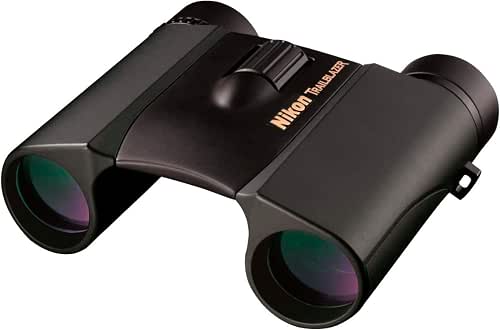
Nikon Trailblazer 10x25mm Waterproof Binoculars (8218)
Provided you want the most compact pick for birding, Nikon Trailblazer fits easily in your pocket. You still get 10x magnification and 25mm objective lenses, so distant songbirds look close and clear. Fully multicoated glass enhances brightness and color, while the sharp, high-contrast view stays detailed edge to edge. Because it’s nitrogen-filled and O-ring sealed, you can trust it in rain, mist, and cold. The rubber armor helps you hold it securely, even with damp hands. Its smooth center focus knob lets you track fast moves. Plus, the case, strap, and covers make travel simple.
- Magnification:10x
- Objective Lens:25mm
- Waterproof:Yes
- Fogproof:Yes
- Prism Type:Roof prism
- Focus Type:Central focus
- Additional Feature:Fully multicoated lenses
- Additional Feature:Pocket-sized foldable design
- Additional Feature:Shock-absorbing rubber armor
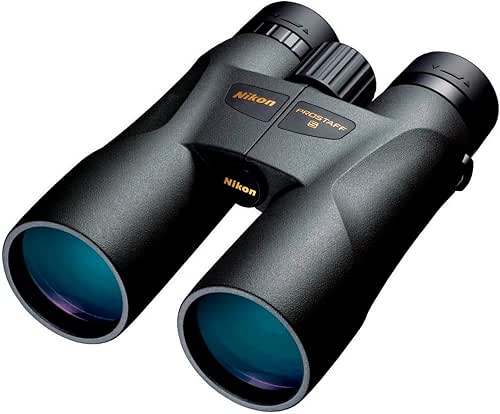
Nikon PROSTAFF 5 12x50mm Waterproof Binoculars (7573)
Should you want reach and clarity, the Nikon PROSTAFF 5 12x50mm handles distant birds well. You get 12x magnification and 50 mm lenses, so faraway details stay bright and sharp at dawn, noon, and dusk. Multilayer-coated optics cut glare and keep colors true, which helps whenever you’re tracking a warbler in shade. The body feels light yet tough, and the rubber armor gives you a secure grip in wet weather. Since it’s nitrogen-filled and O-ring sealed, you can trust it in fog, rain, and rough field conditions.
- Magnification:12x
- Objective Lens:50mm
- Waterproof:Yes
- Fogproof:Yes
- Prism Type:Roof prism
- Focus Type:Central focus
- Additional Feature:High-eyepoint design
- Additional Feature:Turn-and-slide eyecups
- Additional Feature:Fiberglass-reinforced body
Nikon Travelite 12×25 Binoculars Travel Bundle (7279)
Nikon’s Travelite 12×25 bundle is a smart travel pick for birders who want reach without bulk. You get 12x power in a slim, foldable body that slips into a pocket with ease. Fully multi-coated lenses and BaK4 Porro prisms help you see brighter colors and sharper detail, so those quick wing flashes feel less frustrating. The 220-foot view and 13.1-foot close focus give you useful range. Should you wear glasses, the high-eyepoint eyecups help. Plus, the case, strap, caps, and cleaning kit keep travel simple.
- Magnification:12x
- Objective Lens:25mm
- Waterproof:Not specified
- Fogproof:Not specified
- Prism Type:Porro prism
- Focus Type:Central focus
- Additional Feature:BaK4 Porro prisms
- Additional Feature:220 ft field of view
- Additional Feature:Cleaning kit included
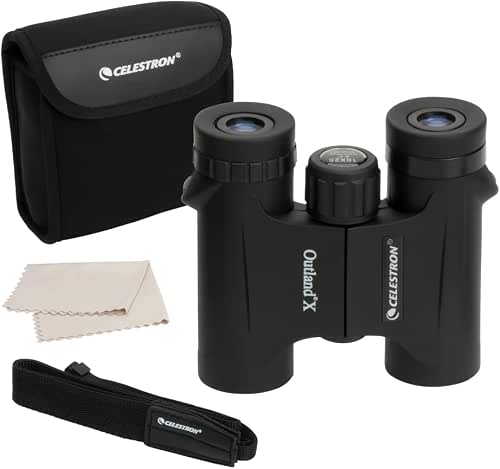
Celestron Outland X 10×25 Binoculars Waterproof Fogproof
Birdwatchers who want one compact pair for everyday use will like the Celestron Outland X 10×25. You get 10x magnification for steady tracking, plus 25 mm lenses that keep views bright and crisp. Multi-coated lenses and BaK-4 prisms help you see sharp color in changing light. The 6.2° field of view makes scanning easy. Because the rubber-armored body is waterproof and nitrogen-purged, you can trust it in rain or fog. It’s lightweight, pocket-friendly, and ready for hikes, trails, and sudden birding moments.
- Magnification:10x
- Objective Lens:25mm
- Waterproof:Yes
- Fogproof:Yes
- Prism Type:BaK-4 prisms
- Focus Type:Central focus
- Additional Feature:6.2° field of view
- Additional Feature:Limited lifetime warranty
- Additional Feature:BaK-4 prisms
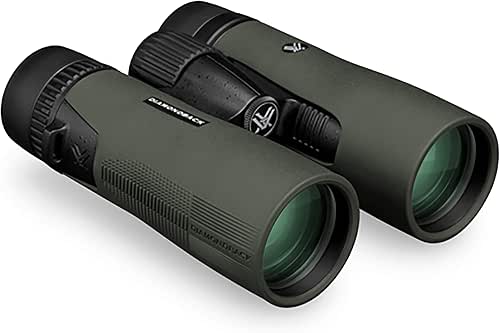
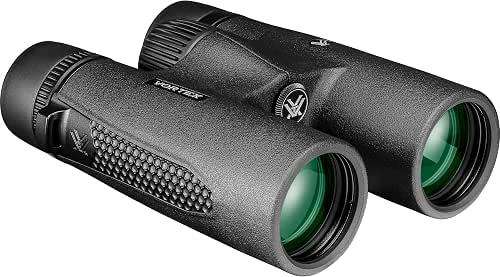
Vortex Optics Diamondback Roof Prism Binoculars 10×42
Vortex’s Diamondback 10×42 gives serious birders premium clarity without the luxury price tag. You get a bright 42 mm objective lens, dielectric fully multi-coated glass, and a crisp 362-foot field of view, so you can track fast wingbeats with less strain. The 10x magnification brings distant birds close, while the 15 mm eye relief and twist-up eyecups help you stay comfortable. Because it’s argon purged, waterproof, and fogproof, you can trust it in rough weather. The rubber armor and short-hinge design also give you a steady, easy grip.
- Magnification:10x
- Objective Lens:42mm
- Waterproof:Yes
- Fogproof:Yes
- Prism Type:Roof prism
- Focus Type:Center focus
- Additional Feature:Dielectric prism coatings
- Additional Feature:Thumb indents grip
- Additional Feature:Tripod mount compatible
Vortex Copperhead HD 10×42 Binoculars (Unlimited Warranty)
The Vortex Copperhead HD 10×42 brings sharp detail to serious birders. You get 10x power and a bright 42 mm lens, so distant warblers stay clear. The HD optical system helps colors look true, and fully multi-coated lenses improve light. With 17 mm eye relief and adjustable eyecups, you can settle in fast. Rubber armor gives you a steady grip, while waterproof, fogproof, and shockproof housing keeps you calm in rough weather. It’s tripod adaptable, includes a strap, and comes with Vortex’s unlimited lifetime VIP warranty.
- Magnification:10x
- Objective Lens:42mm
- Waterproof:Yes
- Fogproof:Yes
- Prism Type:Roof prism
- Focus Type:Center focus
- Additional Feature:Glasspak harness included
- Additional Feature:17 mm eye relief
- Additional Feature:Car window mount
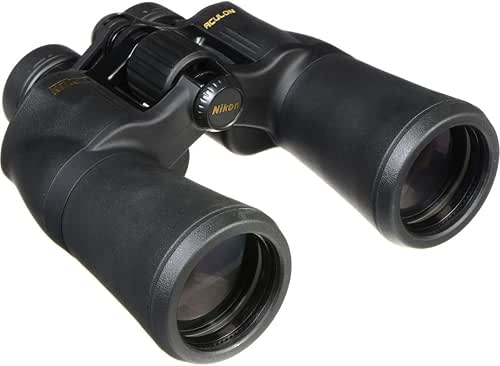
Nikon ACULON A211 12×50 Binoculars (USA Model)
Nikon’s ACULON A211 12×50 fits birders who want a classic zoom and a steady, roomy view. You get 12x magnification and 50 mm lenses, so distant songbirds look crisp in bright or mixed light. Nikon’s Eco-Glass optics use spherical, multilayer coatings for clear color and strong detail. The Porro prism shape gives a wide, natural feel, while the smooth center knob helps you lock focus fast. Turn-and-slide rubber eyecups make long sessions easier, and the rubber armor keeps your grip sure, even in rain. At 2 pounds, it feels solid and tripod-ready.
- Magnification:12x
- Objective Lens:50mm
- Waterproof:Not specified
- Fogproof:Not specified
- Prism Type:Porro prism
- Focus Type:Central focus
- Additional Feature:Spherical Eco-Glass lenses
- Additional Feature:Porro prism design
- Additional Feature:Tripod adaptable
Factors to Consider When Choosing Binoculars To Watch Birds
At the time you choose binoculars for birdwatching, start with magnification and objective size because they shape how much detail you see and how bright the view feels. You’ll also want a wide field of view, since it helps you track quick birds without losing them, and a lightweight build makes long walks much easier on your hands and neck. Finally, check weatherproofing, focus control, and eye relief so your binoculars stay comfortable, clear, and ready in case the weather turns moody.
Magnification And Objective Size
A good pair of birding binoculars starts with two numbers that work together, not one number in a vacuum. Your magnification, like 8x, 10x, or 12x, tells you how close the bird looks. Higher power can show more feather detail, but it also makes every hand tremor louder and can feel less steady. Then the objective size, like 42mm or 50mm, controls how much light you collect. Bigger lenses help at dawn, in shade, or under thick leaves. Together, these numbers appear as 10×42 or 8×32. For most birding, 10×42 gives you a smart mix of brightness, detail, and easy handheld use. You can also check exit pupil, since 3 to 5 mm usually suits daylight and low light.
Field Of View Matters
Field of view can make or break your birdwatching experience, even should your binoculars already have the right magnification and lens size. You want a wider view because it lets you spot fast birds sooner and keep them in sight longer. A field of view of 300 feet or more at 1,000 yards works well whenever you follow flocks or scan thick leaves. Keep in mind that 8x binoculars usually show more than 10x or 12x, so they feel easier in woods and brush. Also, check apparent field of view, since it shows how wide the image feels. Whenever you compare models, convert degrees to feet at 1,000 yards, like 6 degrees, or about 315 feet, so you can judge each view clearly.
Lightweight All-Day Comfort
On long birdwatching days, comfort matters just as much as sharp glass and strong magnification. Whenever you choose binoculars, keep weight under about 24 ounces, because a lighter pair helps your neck and shoulders stay fresh. A compact or mid-size body with 25 to 42 mm lenses gives you a smart balance of brightness and easy handling. You should also check the grip. Slim hinges, thumb indents, and rubber armor make the binoculars feel steady in your hands, even after hours outside. Next, look at eye relief between 12 and 17 mm and smooth eyecups, so you can hold a relaxed viewing position. Finally, a padded strap or sling can move weight off your neck and make every long walk feel easier.
Weatherproof Field Durability
Even though the birds are calm, the weather often isn’t, so your binoculars need to handle wet, rough days without slowing you down. Choose waterproof models with O-ring seals and nitrogen or argon gas inside, because they fight rain, fog, and concealed moisture. Then check the body: rubber armor, shock-absorbing sides, and a reinforced chassis help you survive drops, bumps, and trail scrapes. Also, make sure the optics work in cold mornings and warm afternoons without fogging up inside. A secure, non-slip grip matters too, especially whenever your hands are wet or gloved. Finally, use tethered lens covers, plus a tough case, support, or neck strap, so your binoculars stay protected from transport to sudden storms.
Focus And Eye Relief
Once your binoculars can handle rain, fog, and rough trails, the next thing that shapes your birdwatching experience is how fast and comfortably you can bring a bird into focus. You want a smooth central focus wheel that turns with control, so you can lock onto a warbler before it flits away. Also, check that the focus travel feels short and steady, because fewer turns mean less missed action. Should you wear glasses, choose at least 15 mm of eye relief so you keep the full view without dark edges. Then test the close-focus distance, ideally under 6 to 8 feet, for nearby birds and feather detail. Finally, use the diopter to match both eyes, and make sure the knobs grip well, even with wet gloves.
Final Thoughts
Once you choose the right binoculars, birding feels easier and more rewarding. A steady 10×42 can be your best bet for everyday use, while a compact 10×25 works well whenever you travel light. Should you want more reach, a 12x model can bring distant birds closer, though it might shake more in your hands. Trust your eyes, your budget, and your instincts, and you’ll find a pair that truly fits like a glove.