5 Best Telephoto Lens for Bird Photography in 2026
Bird photography needs reach, fast autofocus, and solid image stabilization. The five lenses in this list cover wildlife zooms, premium super-telephotos, and budget-friendly options.
Some are lighter and easier to carry all day. Others give sharper results or longer reach. Your best pick depends on your camera system, focal length needs, and how much weight you want to carry.
| Canon RF100-400mm Telephoto Lens for EOS R Cameras |
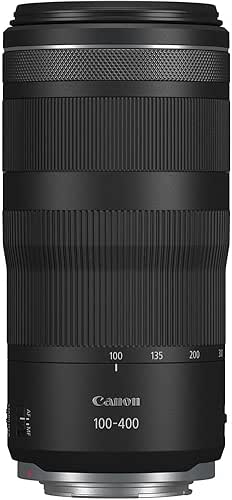
| Best All-Around | Focal Length: 100–400mm | Aperture: f/5.6–8 | Lens Type: Telephoto zoom | VIEW LATEST PRICE | Read Our Analysis |
| Canon RF200-800mm Super-Telephoto Zoom Lens for Mirrorless |
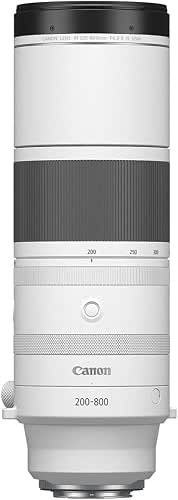
| Best Premium Zoom | Focal Length: 200–800mm | Aperture: f/6.3–9 | Lens Type: Super-telephoto zoom | VIEW LATEST PRICE | Read Our Analysis |
| High-Power 420-1600mm Manual Telephoto Zoom Lens for Canon |

| Best Extreme Reach | Focal Length: 420–1600mm | Aperture: f/8.3 | Lens Type: Manual telephoto zoom | VIEW LATEST PRICE | Read Our Analysis |
| Tamron 70-300mm F/4.5-6.3 Di III RXD Lens for Sony |
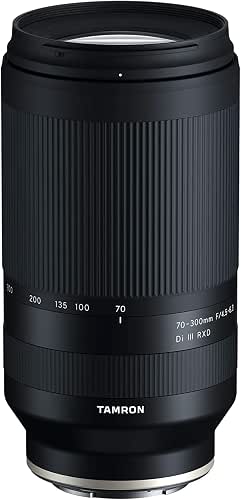
| Best Lightweight | Focal Length: 70–300mm | Aperture: f/4.5–6.3 | Lens Type: Telephoto zoom | VIEW LATEST PRICE | Read Our Analysis |
| Sony E 70-350mm f/4.5-6.3 G OSS Lens |
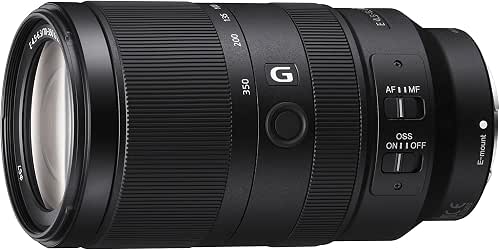
| Best APS-C Pick | Focal Length: 70–350mm | Aperture: f/4.5–6.3 | Lens Type: Super-telephoto zoom | VIEW LATEST PRICE | Read Our Analysis |
More Details on Our Top Picks
Canon RF100-400mm Telephoto Lens for EOS R Cameras
Should you shoot birds with an EOS R camera, Canon’s RF100-400mm hits a strong all-around sweet spot. You get a compact 100–400mm zoom with a 67mm filter thread, 816-gram build, and quiet Nano USM autofocus. The lens’ Optical Image Stabilizer gives you up to 5.5 stops, or 6 with compatible EOS R IBIS. At 400mm, you can reach 0.41x magnification, and the 0.88m close focus helps with nearby subjects. It also works with RF1.4x and RF2x extenders, and it supports 4K video on compatible bodies for versatile bird shooting.
- Focal Length:100–400mm
- Aperture:f/5.6–8
- Lens Type:Telephoto zoom
- Mount:Canon RF
- Autofocus:Nano USM
- Stabilization:5.5-stop IS
- Additional Feature:4x zoom range
- Additional Feature:67mm filter thread
- Additional Feature:RF1.4x/RF2x extender compatible
Canon RF200-800mm Super-Telephoto Zoom Lens for Mirrorless
Canon RF200-800mm F6.3-9 USM gives bird photographers a rare 800mm reach in a lightweight zoom. You get a 4x range from 200mm to 800mm, so you can frame distant birds without changing lenses. Canon’s RF-mount optical design helps keep image quality strong across the zoom range. You can also pair it with the Extender RF1.4x or RF2x at any focal length for even more reach. Its compact, low-weight build makes handheld shooting easier, and you’ll appreciate the mobility whenever you’re tracking wildlife, nature subjects, or outdoor sports.
- Focal Length:200–800mm
- Aperture:f/6.3–9
- Lens Type:Super-telephoto zoom
- Mount:Canon RF
- Autofocus:USM
- Stabilization:Not listed
- Additional Feature:800mm telephoto end
- Additional Feature:World’s first AF zoom
- Additional Feature:Compact lightweight design
High-Power 420-1600mm Manual Telephoto Zoom Lens for Canon
Should you need extreme reach for distant birds, this 420-1600mm Canon telephoto gets you there. You get a high-power f/8.3 manual zoom that starts at 420mm and, with the included 2× teleconverter, reaches 1600mm for truly distant subjects. Its HD optics help you capture crisp detail, while the 62mm filter thread adds flexibility for accessories. This EF-mount lens works with many Canon Rebels and EOS bodies, but you’ll focus manually. In case you’re shooting wildlife, sports, or even the moon, it gives you impressive reach on a budget-friendly platform.
- Focal Length:420–1600mm
- Aperture:f/8.3
- Lens Type:Manual telephoto zoom
- Mount:Canon EF
- Autofocus:Manual focus
- Stabilization:Not listed
- Additional Feature:1600mm with teleconverter
- Additional Feature:62mm filter thread
- Additional Feature:Manual focus operation
Tamron 70-300mm F/4.5-6.3 Di III RXD Lens for Sony
Tamron’s 70-300mm F/4.5-6.3 Di III RXD keeps your birding kit light for Sony mirrorless shooters. You get a black, full-frame and APS-C E-mount zoom that balances reach and portability well. Its 70–300mm range helps you frame perched songbirds and larger birds in flight, while the 15-element, 10-group design delivers uncompromising image quality. You can focus as close as 31.5 cm at 70mm or 59.1 cm at 300mm, and moisture-resistant construction adds confidence. Tamron backs it with a 6-year limited USA warranty.
- Focal Length:70–300mm
- Aperture:f/4.5–6.3
- Lens Type:Telephoto zoom
- Mount:Sony E
- Autofocus:RXD
- Stabilization:Moisture-resistant
- Additional Feature:15 elements, 10 groups
- Additional Feature:31.5cm close focus
- Additional Feature:Tamron 6-year warranty
Sony E 70-350mm f/4.5-6.3 G OSS Lens
Sony’s E 70-350mm f/4.5-6.3 G OSS is a strong APS-C pick for bird photographers. You get a 70–350mm range, or 105–525mm equivalent, so you can frame distant subjects without moving closer. Its 5x super-telephoto zoom stays lightweight at just 22 oz., and you’ll find it remarkably easy to handle on long outings. The G-series optics deliver outstanding corner-to-corner resolution, while the XD Linear Motor gives you fast, precise, quiet autofocus and tracking. Optical SteadyShot helps you keep shots sharp whenever your hands aren’t perfectly steady in the field.
- Focal Length:70–350mm
- Aperture:f/4.5–6.3
- Lens Type:Super-telephoto zoom
- Mount:Sony E
- Autofocus:XD Linear Motor
- Stabilization:Optical SteadyShot
- Additional Feature:5x super-telephoto zoom
- Additional Feature:22 oz. lightweight
- Additional Feature:XD Linear Motor
Factors to Consider When Choosing a Telephoto Lens for Bird Photography
As soon as I choose a telephoto lens for bird photography, I initially look at focal length range and aperture speed, since they shape how close I can get and how well I can shoot in low light. I also pay close attention to autofocus performance and image stabilization because birds move fast and steady shots matter. At last, I check minimum focus distance so I know how well the lens handles nearby subjects and tight compositions.
Focal Length Range
How much reach do you really need? I ask myself that to begin with, because focal length shapes everything I do in bird photography. For small, distant birds, I want at least 400mm on full-frame, or about 300mm on APS-C, so I can fill the frame without heavy cropping. In case I’m chasing skittish or tiny species, I prefer 600–800mm, or I’ll add a 1.4x or 2x extender to work from farther away and avoid disturbing them. I also weigh reach against handling: longer lenses magnify more, but they’re harder to handhold and demand steadier technique. Zooms like 100–400mm or 200–800mm give me flexibility, while primes trade that flexibility for extra reach.
Aperture Speed
A fast aperture can make or break a bird lens for me, because it lets in more light for the shutter speeds I need to freeze wingbeats and quick head turns. I look for f/4 or f/5.6 whenever I can, since each stop gives me roughly twice the light and often one stop more shutter speed. That matters whenever I’m shooting small, active birds at 1/1000s or faster, especially in shade or dense foliage. A wider aperture also helps me keep ISO lower, so my files stay cleaner. It does narrow depth of field, though, so I need to place focus carefully on the eye. With long focal lengths, I still watch for shake and motion blur, even with stabilization.
Autofocus Performance
Autofocus performance is just as critical as aperture for bird photography, because I need a lens that can lock on fast and stay there as a bird changes direction. I look for fast continuous AF with strong tracking, since birds in flight demand instant acquisition and constant updates. A smooth, quiet AF motor matters too, because it cuts hunting and helps the lens stay locked on small, erratic subjects. I also want low focus lag, so I can jump from a perched bird to one taking off without missing the moment. Reliable eye or subject sensing, plus single-point, zone, and expanded AF modes, helps me isolate tiny heads in clutter. I check that performance stays steady across the zoom range, even with teleconverters attached.
Image Stabilization
Image stabilization is the next thing I check after autofocus, because even a sharp lens won’t help provided my hands introduce blur. For bird photography, I want at least 4–6 stops of correction so I can handhold longer telephotos at slower shutter speeds and raise my keeper rate. I pay close attention to lens IS and whether it works with my camera’s IBIS, since paired systems can add another stop or more. IS matters most at 300mm and beyond, especially around 1/500 to 1/125 s, but it won’t freeze a bird in flight, so I still use fast speeds when action matters. Should I be using teleconverters or pushing reach, I expect some drop-off and might lean on a monopod.
Minimum Focus Distance
Minimum focus distance is one of the initial specs I check whenever I want a telephoto lens to do more than just reach far. I look for a short MFD because it lets me fill the frame with nearby birds without cropping, especially whenever I’m after small or nervous subjects. Provided a lens gets under 1 meter, or about 3 feet, I can often work closer while still keeping strong background separation. I also compare MFD with maximum magnification; a short MFD plus 0.3× or better usually gives me more subject size on the sensor. For zooms, I check MFD at each focal length, since even small changes can matter. I still keep enough working distance so I don’t disturb wary birds.
Lens Weight
I usually check lens weight promptly, because a heavy telephoto can wear me down fast during long handheld birding sessions, especially once a setup reaches 1 kg or more. I look at how long I’ll actually be out, since a lens that feels fine for a short walk can become tiring after hours in the field. Lighter options help me stay steady, move quickly, and frame fast birds without constant breaks. Should I want extra reach or better image quality, I’m willing to carry more weight, but I’ll often add a monopod, tripod, or gimbal head to ease the load. I also consider the total system weight, including my camera body and extenders, so I know the kit will still feel manageable.
Compatibility Needs
After checking lens weight, I make sure the telephoto actually works with my camera system, because a lightweight lens still won’t help provided the mount, autofocus, or stabilization aren’t compatible. I always confirm the lens mount matches my body so it connects properly for autofocus and exposure control. Then I check autofocus support, including the AF motor and communication protocol, because I need fast, dependable tracking whenever birds dart through reeds or trees. Should I shoot handheld, I look for coordinated stabilization with my camera’s IBIS to stretch shutter speed headroom. I also verify teleconverter support before I buy, since some lenses won’t accept extenders or might slow focusing. Finally, I consider balance with my camera, tripod, or gimbal so long sessions stay steady and comfortable.
Optical Quality
Whenever I’m choosing a telephoto lens for bird photography, optical quality matters just as much as reach, because longer focal lengths only help provided the lens can still resolve fine detail at real-world distances. I look for strong sharpness, especially corner to corner, so I can crop without losing feather texture or edge detail. Low chromatic aberration also matters, since it keeps colors clean and prevents distracting fringing on high-contrast plumage. I pay attention to maximum aperture too: a wider aperture helps me freeze wing motion and blur backgrounds, while a slower lens might force higher ISO or steadier support. I also value a close minimum focus distance and good magnification, which let me capture smaller birds with more detail and flexibility.
Frequently Asked Questions
How Important Is Image Stabilization for Bird Photography?
I believe image stabilization matters a lot for bird photography because I can keep shots sharper at long focal lengths and slower shutter speeds, though I still need fast autofocus, good technique, and steady hands.
Do Telephoto Lenses Work Well for Bird Photography in Low Light?
Yes, I find telephoto lenses can work well for bird photography in low light provided you pair a fast aperture, steady hands, and higher ISO. I would still expect softer shots and slower shutter speeds.
Can I Use Teleconverters With Bird Photography Lenses?
Yes, I use teleconverters with bird lenses whenever I need extra reach, but you will lose some light and sharpness. I check autofocus compatibility, then trial performance before heading out for birds.
How Does Autofocus Speed Affect Bird Photography Results?
Autofocus speed is the hawk’s strike: I catch fleeting wingbeats, and you will miss less action. Faster focus helps me lock onto birds quickly, increasing keeper rates, especially with erratic flight, branches, and sudden direction changes.
What Camera Settings Are Best for Sharp Bird Photos?
I use shutter priority, set 1/2000s or faster, choose a wide open aperture, raise ISO as needed, and enable continuous autofocus and burst mode. You will get sharper bird photos through keeping settings fast and steady.