5 Best Micro Four Thirds Lens for Bird Photography in 2026
Micro Four Thirds bird photography works best with lenses that balance reach, autofocus, and weight.
The OM System 100–400mm is a strong all-round choice for distant birds.
The Panasonic 100–300mm offers plenty of reach in a lighter, more affordable package.
Smaller primes can deliver faster aperture and sharper results for tighter setups.
The best lens depends on your subjects, shooting style, and budget.
| OM SYSTEM Olympus M.Zuiko 100-400mm Telephoto Lens |

| Best Overall | Focal Length: 100-400mm | Mount: Micro Four Thirds | Aperture: f/5.0-6.3 | VIEW LATEST PRICE | Read Our Analysis |
| Panasonic LUMIX G II 100-300mm Lens (H-FSA100300) |

| Best Value | Focal Length: 100-300mm | Mount: Micro Four Thirds | Aperture: f/4.0-5.6 | VIEW LATEST PRICE | Read Our Analysis |
| Panasonic Lumix 20mm f/1.7 Pancake Lens for Micro Four Thirds |
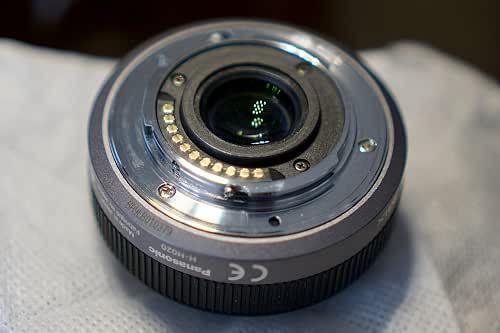
| Best Compact Prime | Focal Length: 20mm | Mount: Micro Four Thirds | Aperture: f/1.7 | VIEW LATEST PRICE | Read Our Analysis |
| Panasonic LUMIX 42.5mm F1.7 Micro Four Thirds Lens |

| Best Portrait Prime | Focal Length: 42.5mm | Mount: Micro Four Thirds | Aperture: f/1.7 | VIEW LATEST PRICE | Read Our Analysis |
| Panasonic LUMIX G 14mm F2.5 II Lens (H-H014AK) |

| Best Budget Prime | Focal Length: 14mm | Mount: Micro Four Thirds | Aperture: f/2.5 | VIEW LATEST PRICE | Read Our Analysis |
More Details on Our Top Picks
OM SYSTEM Olympus M.Zuiko 100-400mm Telephoto Lens
Should you want the most versatile birding zoom, the OM SYSTEM Olympus M.Zuiko 100–400mm leads the pack. You get a Micro Four Thirds telephoto that reaches 200–800mm equivalent, so you can frame distant birds tightly. Its F5.0–6.3 range keeps the lens compact and light, and you can add MC-14 or MC-20 teleconverters for extra reach. Built-in stabilization helps you handhold at 800mm equivalent, while 1.3 m minimum focus lets you capture closer subjects. Dust- and splashproof sealing makes it reliable outdoors.
- Focal Length:100-400mm
- Mount:Micro Four Thirds
- Aperture:f/5.0-6.3
- Lens Type:Telephoto zoom
- Stabilization:In-lens stabilization
- Weather Sealing:Dust- and splashproof
- Additional Feature:MC-14/MC-20 compatible
- Additional Feature:800mm equivalent reach
- Additional Feature:1.3m minimum focus
Panasonic LUMIX G II 100-300mm Lens (H-FSA100300)
Should you want reach without lugging a heavy telephoto, the Panasonic LUMIX G II 100-300mm makes a strong value pick. You get a compact Micro Four Thirds telephoto zoom that covers 100-300mm with a useful f/4-5.6 range. Its Power O.I.S. helps steady handheld shots, and LUMIX Dual I.S. 2.0 enhances results on compatible bodies. The 240 fps linear motor improves focus tracking on birds in motion, while the 1.5 m close focus adds flexibility. With splashproof, dustproof build and an ED element, it’s a practical wildlife lens.
- Focal Length:100-300mm
- Mount:Micro Four Thirds
- Aperture:f/4.0-5.6
- Lens Type:Telephoto zoom
- Stabilization:Power O.I.S.
- Weather Sealing:Dustproof and splashproof
- Additional Feature:240 fps linear motor
- Additional Feature:12° to 4.1° view
- Additional Feature:1 ED element
Panasonic Lumix 20mm f/1.7 Pancake Lens for Micro Four Thirds
Should you want a compact prime for Micro Four Thirds birding, the Panasonic Lumix 20mm f/1.7 is a smart pick. You get a Panasonic Lumix G H-H020 pancake lens with a Micro Four Thirds mount, 20mm focal length, and 40mm equivalent view. Its f/1.7 aperture helps you work in lower light and blur backgrounds, while the aspherical design keeps things sharp. You can focus as close as 0.20 m, which helps with nearby subjects. It’s lightweight, tiny, and uses 46 mm filters, so you can carry it easily on long outings.
- Focal Length:20mm
- Mount:Micro Four Thirds
- Aperture:f/1.7
- Lens Type:Pancake prime
- Stabilization:None listed
- Weather Sealing:Not listed
- Additional Feature:40mm equivalent focal length
- Additional Feature:0.20m minimum focus
- Additional Feature:46mm filter size
Panasonic LUMIX 42.5mm F1.7 Micro Four Thirds Lens
Panasonic’s LUMIX 42.5mm F1.7 shines as a portrait prime for bird photographers who value reach and control. You get an 85mm equivalent view, which helps you frame perched birds with pleasing background separation. The bright f/1.7 aperture lets you shoot in dim light and blur clutter fast. POWER O.I.S. steadies your shots, while 240 fps Drive AF helps you lock focus quickly on mirrorless bodies. You can also focus as close as 31 cm, making this lens useful for details and feeder scenes. Its ASPH. design keeps results sharp and compact.
- Focal Length:42.5mm
- Mount:Micro Four Thirds
- Aperture:f/1.7
- Lens Type:Prime lens
- Stabilization:Power O.I.S.
- Weather Sealing:Not listed
- Additional Feature:85mm equivalent focal length
- Additional Feature:31cm close focus
- Additional Feature:0.2x magnification
Panasonic LUMIX G 14mm F2.5 II Lens (H-H014AK)
Should you want a compact, affordable prime for mirrorless shooting, the Panasonic LUMIX G 14mm F2.5 II fits well. You get a 14mm wide-angle lens with a fast F2.5 aperture, so you can shoot sharp images in low light and create narrow depth of field whenever you desire subject isolation. Its aspherical element helps maintain clarity, while the pancake design keeps your kit light and easy to carry. You can mount it on Micro Four Thirds cameras, including LUMIX G bodies, and use its 46mm filter thread for simple accessory options.
- Focal Length:14mm
- Mount:Micro Four Thirds
- Aperture:f/2.5
- Lens Type:Pancake wide-angle
- Stabilization:None listed
- Weather Sealing:Not listed
- Additional Feature:46mm filter thread
- Additional Feature:Aspherical element(s)
- Additional Feature:Super low-profile build
Factors to Consider When Choosing a Micro Four Thirds Lens For Bird Photography
Once you choose a Micro Four Thirds lens for bird photography, you’ll want enough focal length reach to keep subjects close without disturbing them. You’ll also need a bright aperture, solid image stabilization, fast autofocus, and close focusing for sharp results in changing field conditions. Together, these factors help you capture birds clearly, whenever they’re perched nearby or moving quickly at a distance.
Focal Length Reach
For bird photography on Micro Four Thirds, reach matters most: you’ll usually want an effective 35mm-equivalent focal length of at least 600–800mm to frame small or distant birds tightly. Because the system uses a 2× crop factor, a native 300–400mm lens gives you that range, so check native focal length initially. Should you need more distance, teleconverters can help, but they’ll also reduce effective aperture and could slow autofocus or soften detail. Don’t ignore working distance, either: longer lenses isolate subjects, yet they require more room to track and compose. Lastly, pair reach with solid stabilization or support, since longer focal lengths magnify shake and often demand faster shutter speeds, higher ISO, or a steadier hand.
Aperture Brightness
Reach gets you close enough, but aperture brightness determines whether you can actually freeze the action once you’re there. A wider maximum aperture, like f/2.8 or faster, lets in more light, so you can use quicker shutter speeds, lower ISO, and less motion blur whenever a warbler darts or a heron takes off. On Micro Four Thirds, that matters even more because the smaller sensor already gives you deeper depth of field at the same f-number, so bright glass helps you isolate your subject. Don’t forget the tradeoffs: very fast telephotos usually cost more and weigh more. Also, shooting wide open can soften corners and add vignetting, so learn the lens’s sweet spot, often one or two stops down, where sharpness improves without giving up too much light.
Image Stabilization
Image stabilization matters a lot in bird photography, because at 200–800mm equivalent, even tiny hand movements get magnified and blur the frame. You should look for in-body or in-lens stabilization that gives you about 3–5 EV of shake reduction, since it helps you handhold longer at long focal lengths. That extra steadiness can make a real difference whenever you’re tracking distant birds or working from awkward positions. Still, don’t depend on stabilization alone for fast action, because it can’t freeze subject motion. Suppose you employ a monopod or light tripod, stabilization can still help against damping low-frequency movement. And should you plan to add teleconverters, check how the system performs at the longer effective focal length, since stabilization often gets less effective as reach increases.
Autofocus Speed
Autofocus speed can make or break bird photos, especially should a subject darts across the frame or suddenly lifts off. You’ll want a lens that snaps to focus quickly—ideally in under 0.2 to 0.3 seconds— so you don’t miss the moment. Fast drive motors and contrast/phase-detect hybrid systems help you lock onto birds in flight and keep up with erratic hops, turns, and wingbeats. Prioritize strong continuous AF tracking and reliable eye or animal recognition, because those features keep focus where you need it. Also check how the lens performs at longer focal lengths and in low light; dawn and dusk can expose weak motors. Good AF ought to stay accurate across the zoom range and remain dependable should subjects move unpredictably.
Close Focusing
Getting close matters whenever you want tight portraits of perched birds or small subjects in the field. You should look for a lens with a short minimum focus distance, ideally under about 1.5 m, so you can fill the frame without backing away. Check the magnification too: around 0.2× or higher gives you more subject detail at close range, and that matters for feathers, eyes, and beaks. Close focus can affect sharpness and autofocus speed, so choose a lens that stays crisp when it’s working near its limit. Also watch focus breathing; minimal change in field of view helps you keep composition steady as you focus in. In case you shoot handheld, pairing close focus with optical stabilization or IBIS makes sharp results easier at longer effective focal lengths.
Weather Sealing
Whenever you’re birding in wet, dusty, or salty conditions, weather sealing becomes a major advantage. It helps protect your lens’s internal mechanics and electronics whenever you shoot in rain, fog, dusty trails, or sea spray, so you’re less likely to face autofocus hiccups or other malfunctions. Look for seals and gaskets around the mount, switches, and focus or zoom rings; they block moisture and grit from entering the barrel and help the lens last longer. In case your camera body is also sealed, you can shoot comfortably handheld without extra rain covers. Still, weather sealing isn’t waterproofing, so don’t submerge the lens or rely on it during long, heavy downpours. Wipe it dry, clean the contacts, and service it periodically.
Lens Weight
After weather sealing, lens weight is another big factor to reckon with about the time you’re choosing a Micro Four Thirds lens for bird photography. Heavier telephoto lenses often give you more reach and wider maximum apertures, but they’ll also tire you out faster during handheld shooting or long stakeouts. Should you plan to hike, carry extra gear, or switch lenses often, total system weight matters just as much as the lens itself. Lighter lenses help you react faster, pan more smoothly, and reposition quickly whenever birds move unexpectedly. Still, don’t chase the lightest option blindly. Pick the lightest lens that still gives you the focal length, aperture, and durability you need for your usual birding conditions. In case your lens is heavy, a sturdy monopod or tripod can help steady your shots.
Teleconverter Support
Teleconverters can be a smart way to squeeze more reach out of a Micro Four Thirds bird lens, especially while you need to frame distant subjects without moving closer. A 1.4× or 2.0× converter enhances focal length, but you’ll lose one to two stops of light, so autofocus can slow and you might require higher ISO or a slower shutter. Make sure the converter matches your lens mount and optical design; the wrong pairing can wreck image quality and AF reliability. You’ll usually get better results with a sharp, long telephoto than with a short lens plus converter. Also, expect some loss of stabilization, and bear in mind that magnification changes focus behavior and depth of field, making fast, precise subject separation harder.
Frequently Asked Questions
Which Micro Four Thirds Lens Gives the Best Autofocus for Birds in Flight?
Like lightning chasing wings, you’ll get the best bird in flight autofocus from the Olympus M.Zuiko 150 400mm f/4.5 TC1.25x IS PRO; it focuses fast, locks confidently, and tracks birds with impressive precision.
Do Teleconverters Work Well With Micro Four Thirds Bird Photography Lenses?
Yes, you can use teleconverters, but they often slow autofocus and reduce sharpness. You will get more reach, yet you will need good light and steady technique. For birds, you will usually prefer the native lens without one.
What Is the Best Budget Micro Four Thirds Lens for Bird Photography Beginners?
You’ll spot sharp feathers with the Panasonic 100 to 300mm II; it’s your best budget pick for beginners. You get solid reach, quick autofocus, and steady shots, letting distant birds fill your frame without emptying your wallet.
How Important Is Image Stabilization for Handheld Bird Photography?
You’ll benefit a lot from image stabilization whenever you shoot handheld birds, especially at long focal lengths. It won’t freeze subject motion, but it’ll steady your framing, reduce blur, and improve your keeper rate dramatically.
Can Micro Four Thirds Lenses Capture Small Songbirds at Long Distances?
Yes, you can, especially with long telephoto Micro Four Thirds lenses and good technique. You will get extra reach, but tiny songbirds still need patience, steady support, and careful autofocus to fill the frame well.