10 Best Parrot Pellets for 2026
Choosing the right pellet can make a real difference in your parrot’s health, energy, and daily routine.
You will see options for large and small species, plus formulas that work for picky eatters, foraging habits, and better nutrition overall.
The challenge is not just finding a pellet your bird accepts; it is finding one that supports long-term balance.
A few standout choices may surprise you, especially when size and ingredients start to matter.



More Details on Our Top Picks
ZuPreem FruitBlend Bird Food for Large Birds
ZuPreem FruitBlend Flavor Pellets are a strong choice if you feed a large parrot, such as an Amazon, macaw, or cockatoo, and want a daily pellet that helps anchor a balanced diet. These USA-made pellets feature fruit shapes, colors, and flavors, including orange, apple, grape, and banana. They are fortified with vitamins, minerals, and amino acids and contain no added sugar. Feed them daily to help support health and wellbeing in adult large birds. The 3.5-pound bags come in a 2-pack, which makes it easier to keep your bird on a pellet-inclusive diet.
- Form:Pellet
- Target Size:Large birds
- Pack Size:3.5 lb x 2
- Life Stage:Adult
- Country:USA
- Diet Type:Raw
- Additional Feature:Fruit-shaped pellets
- Additional Feature:No added sugar
- Additional Feature:Fortified vitamins/minerals
LAFEBER’S Garden Veggie Nutri-Berries Bird Food 3 lb
LAFEBER’S Garden Veggie Nutri-Berries Bird Food, 3 lb is a strong pick if you want a complete parrot diet that also keeps your bird engaged at mealtime. You get a nutritionally complete, plant-based formula with human-grade, non-GMO ingredients, including carrots, peas, and broccoli. The round cluster shape boosts foraging and provides beak exercise, so your bird stays busy and is less likely to feel bored. It is high in fiber, contains balanced omega-3 and omega-6, and supports skin, feathers, and immunity. You can serve it as a full diet, a treat, or a snack.
- Form:Cluster
- Target Size:Parrots
- Pack Size:3 lb
- Life Stage:All life stages
- Country:USA
- Diet Type:Plant-based
- Additional Feature:Real veggie pieces
- Additional Feature:Twice the foraging
- Additional Feature:Prevents feather picking
TOP’s Organic Mini Parrot Pellets for Small Birds
TOP’s Organic Mini Parrot Pellets are a strong pick if you are feeding budgies, cockatiels, parrotlets, lovebirds, or other small parrots that do best on a tiny pellet size. You get USDA Organic, non-GMO, corn-free, soy-free nutrition in 3/32-inch pellets that suit daily feeding. The cold-pressed formula helps preserve nutrients from sunflower seed, quinoa, pumpkin, greens, and herbs. You will not find artificial colors, flavors, or synthetic preservatives here. The 1-pound bag is handy, and the small pellet size can help reduce waste when you serve about as much as your bird wants each day.
- Form:Pellet
- Target Size:Small birds
- Pack Size:1 lb
- Life Stage:All life stages
- Country:USA
- Diet Type:Vegan
- Additional Feature:USDA Organic certified
- Additional Feature:Cold-pressed pellets
- Additional Feature:Soy and corn free
LAFEBER’S El Paso Nutri-Berries Bird Food for Parrots
If you want a complete bird food that keeps your parrot engaged while delivering pellet-level nutrition, LAFEBER’S El Paso Nutri-Berries is a strong pick. You get a 3-pound bag of Nutri-Berries made in the United States for all life stages, especially large parrots. Avian vets and nutritionists formulated it with non-GMO, human-grade ingredients, real bell peppers, and no artificial colors, flavors, or preservatives. Its round shape encourages beak play and foraging, which can help reduce boredom and feather picking. Use it as a full diet or a tasty snack.
- Form:Nutri-Berries
- Target Size:Large breeds
- Pack Size:3 lb
- Life Stage:All life stages
- Country:USA
- Diet Type:Plant-based
- Additional Feature:Bell pepper pieces
- Additional Feature:Spiced savory flavor
- Additional Feature:Foraging-focused shape
ZuPreem True Harvest Parrot Pellets 3 lb (2-Pack)
ZuPreem True Harvest Parrot Pellets, 3 lb (2-Pack) is a strong pick if you want a complete daily pellet for medium to large parrots, including conures, caiques, African greys, senegals, amazons, eclectus, and small cockatoos. You get 6 pounds total, made in the USA, with whole grains, real vegetables, and added vitamins, minerals, and amino acids. It is low in fat and free of artificial colors and flavors. Feed about 1/4 to 1/2 cup daily, keep pellets at 60% or more of the diet, and mix them into seed gradually over 7 to 10 days.
- Form:Pellet
- Target Size:Medium-large parrots
- Pack Size:3 lb x 2
- Life Stage:All life stages
- Country:USA
- Diet Type:Plant-based
- Additional Feature:Real vegetables
- Additional Feature:7–10 day transition
- Additional Feature:60% diet target
Hagen Tropican Parrot Food with Peanuts & Sunflower Seeds
Hagen Tropican High Performance Parrot Food is a strong choice when you need a nutrient-dense pellet for larger parrots that hold food while they eat. The product features extruded sticks with peanuts, sunflower seeds, flaxseed, grains, and nuts, plus added vitamins, minerals, and omega fatty acids. It is suitable for conures, amazons, greys, cockatoos, macaws, and other large species at any life stage, especially during weaning, breeding, molting, or recovery. The sticks break cleanly, so your bird can grip and nibble easily. Use it as a complete diet or as a supplement. The formula contains no artificial colors or preservatives.
- Form:Extruded sticks
- Target Size:Larger parrots
- Pack Size:3.3 lb
- Life Stage:All life stages
- Country:USA
- Diet Type:Veterinary diet
- Additional Feature:High-performance formula
- Additional Feature:Clean-break sticks
- Additional Feature:Omega fatty acids
Parrot Bird Food No Sunflower Seeds 4 lbs
Sweet Harvest’s Parrot Bird Food No Sunflower Seeds 4 lbs is a smart choice for adult parrots of all sizes, especially birds that do best with a no-sunflower blend and a more varied seed mix. It contains safflower, buckwheat, oats, peas, fruits, nuts, and cuttlebone, plus added vitamins and minerals for daily support. The mix provides 12% protein and 10% fat, and it is triple cleaned and nitrogen flushed to help preserve freshness. Because it contains no filler ingredients, you can expect less waste and a plant-based formula your birds can enjoy.
- Form:Seeds
- Target Size:All sizes
- Pack Size:4 lb
- Life Stage:Adult
- Country:USA
- Diet Type:Plant-based
- Additional Feature:No sunflower seeds
- Additional Feature:Triple cleaned freshness
- Additional Feature:Cuttlebone included
LAFEBER’S Premium Daily Diet Pellets for Macaws & Cockatoos
LAFEBER’S Premium Daily Diet Pellets for Macaws and Cockatoos are an excellent choice when you want a nutritionally complete daily diet formulated specifically for large parrots. Avian veterinarians and nutritionists develop the recipe, so you can feed them with confidence. The formula contains balanced antioxidants and omega-3 and omega-6 fatty acids to support skin, feathers, and immune health. Ingredients are non-GMO and human-grade, with no artificial colors, flavors, or preservatives. Made in the USA in small batches on the Lafeber family farm, the product comes with a 100% satisfaction guarantee.
- Form:Pellets
- Target Size:Macaws/cockatoos
- Pack Size:5 lb
- Life Stage:All life stages
- Country:USA
- Diet Type:Complete diet
- Additional Feature:Small-batch packaged
- Additional Feature:Balanced antioxidants
- Additional Feature:Human-grade ingredients
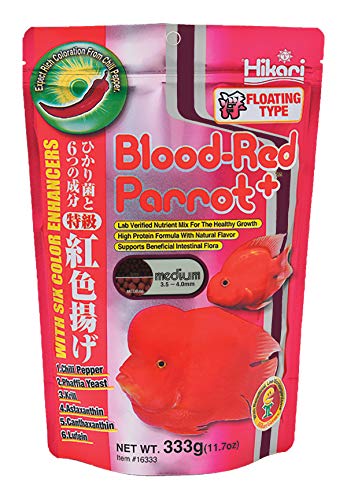
Hikari Blood Red Parrot+ Fish Food Medium Pellet 11.7 oz. (333g)
If you feed a Blood Red Parrot cichlid and want a pellet designed for both color and growth, Hikari Blood Red Parrot+ Fish Food is an easy standout. The medium pellet is suitable for Blood Red Parrot fish at all life stages, and the high-protein formula supports daily feeding, healthy development, and long-term robustness. Chili pepper, Phaffia yeast, krill, astaxanthin, and marigold flower meal help boost color, while vitamin C and living microorganisms support immunity and digestion. The 11.7 ounce (333 g) bag is a smart choice for consistent, targeted care.
- Form:Medium pellet
- Target Size:Blood Red Parrot fish
- Pack Size:11.7 oz
- Life Stage:All life stages
- Country:USA
- Diet Type:High protein
- Additional Feature:Color-enhancing formula
- Additional Feature:Living microorganisms
- Additional Feature:Astaxanthin enriched
Psittacus Minor Complete Pellet Diet for Lovebirds
Psittacus Minor Complete Pellet Diet is a strong choice for lovebirds, parrotlets, and green-cheeked conures that need a species-specific maintenance diet during reproductive inactivity. You can feed these European-made extruded pellets as a complete diet, or offer them with fresh fruits and vegetables for variety. The formula uses high-quality, non-GMO ingredients with natural flavors, no artificial coloring, and no synthetic antioxidants. With over 20 years of avian nutrition research behind it, Psittacus aims to meet your bird’s needs. Keep pellets at 70 to 80 percent of the diet for best results, and use the 450 g bag for convenient feeding.
- Form:Extruded pellet
- Target Size:Small parrots
- Pack Size:1 lb
- Life Stage:Maintenance phase
- Country:Europe
- Diet Type:Complete diet
- Additional Feature:Species-specific formula
- Additional Feature:70–80% pellet ratio
- Additional Feature:No synthetic antioxidants
Factors to Consider When Choosing Parrot Pellets
When choosing parrot pellets, match the formula to your bird’s species and life stage so it supports the appropriate needs. Check ingredient quality and confirm the pellet size and shape suit your parrot’s beak and feeding style. Choose a product that provides complete nutrition, not just a few vitamins or fillers.
Species-Specific Formulation
Species-specific pellets help you match a bird’s beak, appetite, and nutrient needs instead of relying on a one-size-fits-all mix. Choose pellet size and hardness for your bird’s species. Macaws, cockatoos, and amazons usually do better with larger, firmer pellets, while conures and budgies need smaller, finer pieces to reduce waste and choking risk. Then check the nutrient profile. Long-lived large parrots often need more vitamin D, calcium, and balanced fatty acids, while small parakeets may need denser protein per gram. If your bird’s species tends toward obesity or fatty liver, pick lower-fat pellets and measure portions. For foragers, textured or clustered pellets can boost acceptance, and selective eaters often do better with uniform pellets.
Life Stage Fit
Beyond species, your bird’s life stage should guide pellet choice. You need a formula that matches growth, maintenance, breeding, or molt, because protein, calcium, and calorie needs change with age and reproduction. For chicks and juveniles, pick junior or weaning pellets with smaller sizes or softer textures, so your bird can chew them easily and shift from handfeeding to solids. Adult maintenance diets suit steady, healthy birds, and often provide balanced calories without excess. If your bird is breeding, laying, or molting, choose pellets with higher crude protein, available calcium, vitamin D3, and omega fatty acids to support egg production and feather regrowth. For older birds, consider lower fat, lower calorie options that still support organ and feather health. Always check the label.
Ingredient Quality
Ingredient quality matters just as much as pellet shape or size, so read the ingredient list before you buy. You should see whole grains, vegetables, and named plant ingredients like sunflower, quinoa, or pumpkin, not vague grain mixes or unnamed fillers. Check that the formula includes essential vitamins and minerals, especially vitamin A, vitamin D3, calcium, and trace minerals, because pellets should give your bird a solid nutritional baseline. Choose options without artificial colors, flavors, or synthetic preservatives such as BHA, BHT, or ethoxyquin. Also look for quality protein sources and healthy fats from seeds, legumes, and omega rich ingredients. Avoid added sugars and excess simple carbs. Review crude protein, fat, and fiber levels to match your bird’s needs.
Pellet Size And Shape
Once you have checked the ingredient list, the next factors to consider are pellet size and shape, because both affect how easily your bird can eat and enjoy the food. Match the diameter to your bird’s beak and feeding style. Small parrots often handle pellets around 3/32″ to 1/8″, while medium and large birds require noticeably bigger pieces. Shape matters as well. Spherical pellets can encourage foraging and beak play, while extruded sticks allow larger birds to grip and gnaw. Do not choose pellets so large or hard that your bird cannot manage them, or so tiny that it swallows them whole. Consistent size and shape also reduce selective feeding. If you are switching foods, introduce the new pellet gradually over seven to 14 days.
Nutritional Completeness
A quality parrot pellet should do more than fill the bowl, it should provide a balanced mix of protein, fat, and carbohydrates, plus added vitamins and minerals so it can serve as your bird’s main daily diet without depending on seeds. You should check the guaranteed analysis and match it to your bird’s life stage. Young, breeding, or recovering birds often need more protein and fat, while maintenance diets usually need moderate levels. Look for pellets fortified with vitamins A, D3, E, B-complex, calcium, zinc, iron, and selenium to help protect feathers, immunity, and bones. Choose formulas with whole grains, legumes, and amino acids like methionine and lysine, not lots of fillers or sugar. If your bird has special needs, pick a labeled formula for that condition.
Frequently Asked Questions
How Long Should Parrot Pellets Stay Fresh After Opening?
Use parrot pellets within 4 to 6 weeks after opening. Seal them tightly, keep them cool and dry, and discard any that smell stale, look dusty, or feel damp.
Can Pellets Replace Fresh Fruits and Vegetables Entirely?
No, they cannot replace them entirely. You need pellets for balance, fruits for variety, vegetables for vitamins, and fresh foods for enrichment. Pellets support health, but whole produce keeps your parrot thriving.
How Often Should Pellet Brands Be Switched for Parrots?
You should not switch pellet brands often. Keep your bird on one trusted formula unless your avian veterinarian recommends a change. If you do change brands, transition gradually over 7 to 14 days to avoid digestive upset.
What Pellet Size Is Safest for Young Parrots?
Choose tiny, hatchling-sized pellets; they are safest for young parrots and fit easily in the beak. They reduce choking risk, support easy chewing, and help your bird transition smoothly.
How Can I Tell if My Parrot Dislikes a Pellet Formula?
You can tell your parrot dislikes a pellet formula if it repeatedly refuses the food, tosses it aside, chews and then spits it out, eats less, or loses weight. Introduce a new formula gradually and monitor its droppings and energy levels, as changes there can also indicate a problem.